How to Build Zuora Experiences for Commerce
Zuora is a powerful billing engine - but billing is only half the equation. The other half is commerce: the customer-facing experiences where people discover your product, choose a plan, enter their payment details, and complete a purchase. This guide covers what production-ready commerce infrastructure on Zuora looks like, why it matters, and how to deploy it without building from scratch.
Building Commerce Experiences on Zuora
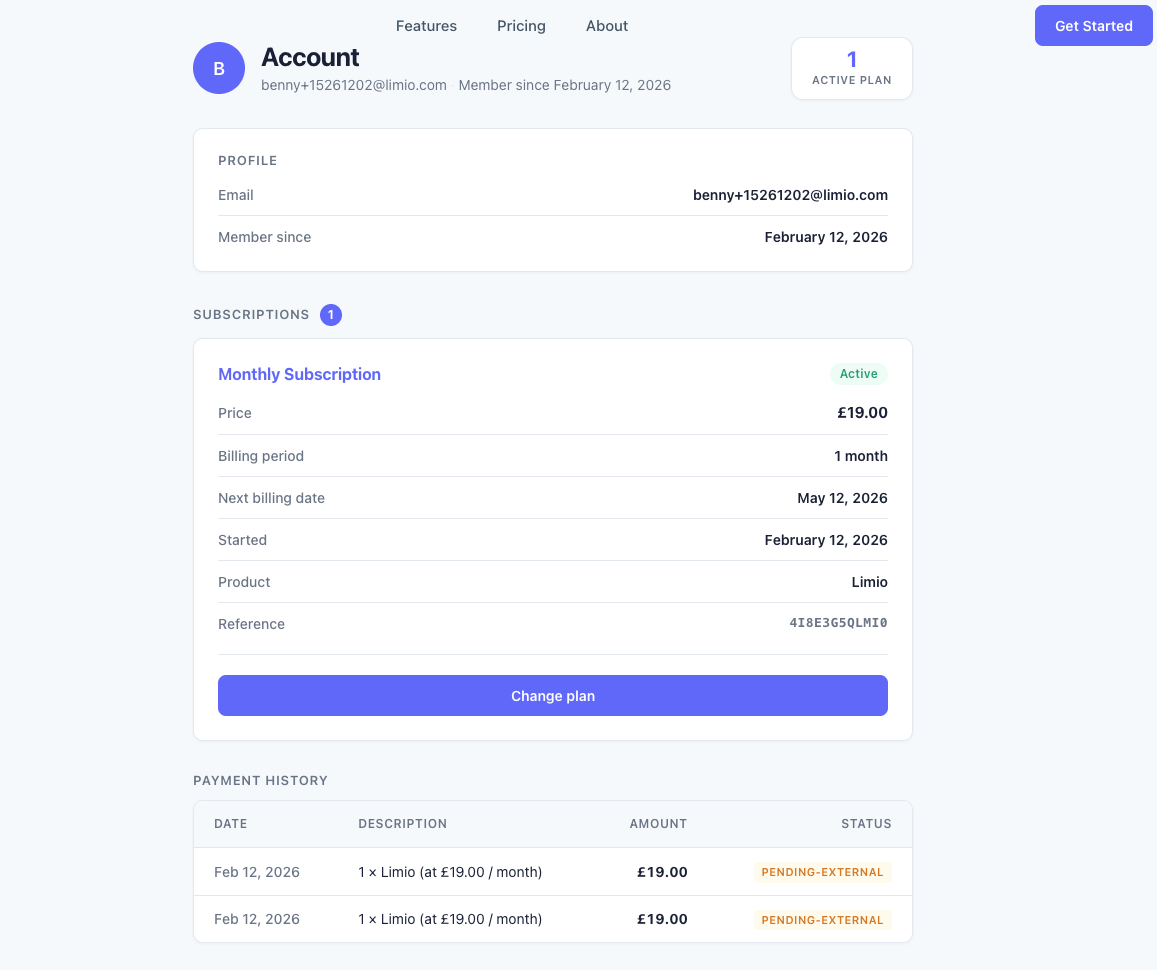
Zuora is a powerful billing engine. It handles subscriptions, invoicing, revenue recognition, and payment collection at scale. But billing is only half the equation. The other half is commerce: the customer-facing experiences where people discover your product, choose a plan, enter their payment details, and complete a purchase. And later, the experiences where they upgrade, add seats, apply a promo code, or decide whether to cancel.
Building commerce experiences on Zuora is a challenge every subscription business faces. Zuora itself is investing in this space - tools like Extension Studio give admins low-code customisation of internal workflows, and Zephr provides AI-powered paywalls and personalisation for media publishers. These are valuable for their specific use cases. But building a complete commerce experience — the kind that actually converts visitors into subscribers and turns subscribers into loyal, expanding customers — requires dedicated commerce infrastructure.
This guide covers what that infrastructure looks like, why it matters, and how to deploy it on Zuora without building from scratch.
What Does a Commerce Experience on Zuora Actually Need?
There is an important distinction between displaying billing data and running commerce. Displaying billing data means pulling subscription information from Zuora and showing it in a portal — the subscriber’s current plan, their next invoice, their payment method on file. This is useful, and it is roughly analogous to how Salesforce Experience Cloud pulls CRM data into customer-facing views. But it is not commerce.
Commerce is what happens when a visitor lands on your pricing page, compares plans, adds a subscription to a cart, enters their details, applies a coupon, and completes checkout. Commerce is what happens when an existing subscriber sees a contextual upsell for a higher tier, or gets offered a bundle that pairs their current subscription with a complementary product. Commerce is what happens when someone clicks “cancel” and encounters a personalised save flow that addresses their specific reason for leaving.
Here is what production-ready commerce on Zuora actually requires:
Cart and checkout infrastructure. A shopping basket that handles multiple line items with correct pricing calculations. A modular checkout flow that you can configure without engineering — fields for user details, address, and payment in the sequence that converts best. Express payment methods like Apple Pay and PayPal alongside traditional card entry via Zuora’s hosted payment methods. Abandoned cart recovery that brings people back to complete their purchase.
Order orchestration. An event-driven system that takes customer actions — new subscriptions, plan switches, cancellations, payment method updates — and orchestrates them across Zuora, Salesforce, and your fulfilment systems automatically. Not just API calls, but an architecture that handles sequencing, error recovery, and real-time synchronisation without custom middleware.
Product intelligence. The logic that determines which upsell to show, which cross-sell is relevant, which bundle makes sense for a given customer. Upgrade and downgrade path definitions. Dependency management between products. This is not just a catalogue — it is the commercial strategy encoded into the buying experience.
A promotion engine. Promo codes. Percentage and fixed-amount discounts. Tiered discounts that scale with commitment. Segment-based promotions that target specific customer groups. Campaign management with expiry dates, eligibility rules, and attribution tracking. All of this unified across every channel — your website, your sales team’s CRM, your partner portals — so the same promotion logic applies everywhere.
Conversion optimisation. A/B testing of pricing pages, checkout flows, and landing pages. Cancel-save funnels that turn churn into retention. Analytics that show you where visitors drop off, which offers convert best, and which save flows actually work — powered by server-side tracking that is not blocked by ad blockers.
International readiness. Multi-currency pricing in local currencies. Multi-language experiences. IP-based geolocation that routes visitors to the right localised checkout. Tax calculation that adapts to the customer’s jurisdiction.
Zuora’s own tools address specific parts of this landscape. Extension Studio is powerful for customising internal admin workflows. Zephr is excellent for media paywall logic. But a complete commerce experience that covers the full journey from discovery to checkout to retention requires a dedicated commerce layer on top of Zuora’s billing foundation.
Why Commerce Should Be Owned by Revenue Teams, Not Finance
Here is a question worth asking: who in your organisation needs to control the commerce experience?
It is not your finance team. Finance owns billing operations — invoicing, revenue recognition, tax compliance, dunning. These are essential, and Zuora handles them well. But the people who need to change a pricing page, launch a promotional campaign, test a new checkout flow, or design a cancel-save journey are your revenue operations, marketing, and product teams.
When commerce lives inside your billing platform, every pricing experiment requires a support ticket. Every new promotional campaign requires engineering time. Every checkout optimisation is gated by a sprint backlog. Your billing platform becomes a bottleneck for commercial agility.
There is also the question of billing provider independence. What happens if you need to evaluate alternative billing providers, add a second one, or support a hybrid model? If your commerce experience is tightly coupled to your billing backend, switching or expanding your billing infrastructure means rebuilding your entire customer-facing experience from scratch.
The architecture that works is clear: the commerce layer should sit between your customer touchpoints and your back-office systems, decoupled from both. Zuora handles billing. Your commerce platform handles the customer experience. They integrate deeply, but they are not the same system, and they should not be owned by the same team.
This is not a theoretical argument. It is a practical one. The businesses that grow fastest in subscription markets are the ones where commercial teams can move independently — testing offers, optimising funnels, and launching campaigns without waiting for anyone else.
Move Fast: Why Commerce Agility Is a Competitive Advantage
Subscription markets are crowded. Whether you sell software, media, services, or connected devices, your customers have alternatives. The commerce experience — how easy it is to buy, how compelling the upgrade path is, how frictionless the self-service portal feels — is increasingly where you win or lose.
The businesses that pull ahead are the ones that iterate on their commerce experience every week, not every quarter. They A/B test pricing models to find the structure that converts best. They launch promotional campaigns in hours, not days. They experiment with checkout layouts, save offers, and upsell placements continuously.
This requires tooling that moves at the speed of your commercial team. No-code configuration for offer management and campaign creation. But also developer extensibility for when you need something custom. Modern platforms now support vibe coding with AI tools like Claude Code — meaning a developer can describe what they want a custom component to do in natural language and have production-ready React code generated in minutes, not sprints. This is not a gimmick. It is a fundamental shift in how fast commerce teams can innovate.
When your commerce platform lets business teams launch pricing changes five to ten times faster than traditional approaches, you stop debating whether to test an idea and just test it. That velocity compounds. Over a year, the team running fifty experiments will outperform the team that ran five.
Building Production-Ready Zuora Experiences with Limio
Limio is a Zuora partner and an omnichannel subscription commerce platform that provides exactly this dedicated commerce layer. It integrates natively with Zuora — catalogue, orders, subscriptions, and payments all sync automatically — without requiring custom integration work. It is not a replacement for Zuora. It is the commerce platform that sits on top of it.
Here is what that looks like in practice.
Cart and Checkout That Converts
Limio provides a modular checkout builder that lets you configure the entire purchase flow without engineering. Drag and drop components for user information, address collection, and payment entry. Customise the field sequence, layout, and branding. Add express payment options — Apple Pay, PayPal — alongside Zuora’s hosted payment methods for traditional card entry.
The result is checkout experiences that convert. Limio customers have seen a 12.9% lift in checkout conversion after deploying optimised flows. Shopping basket functionality handles multiple line items with accurate pricing, tax calculation via Zuora’s preview API, and abandoned cart campaigns that bring back customers who did not complete their purchase.
Order Orchestration That Just Works
Every customer action in Limio — a new subscription, a plan switch, a cancellation, a payment method update — triggers an event that syncs to Zuora automatically. This event-driven architecture handles the orchestration: creating the right objects in Zuora, updating Salesforce, and triggering webhooks to fulfilment systems. No custom middleware. No manual data reconciliation.
This is not just an API wrapper. It is order orchestration — managing the sequence, handling edge cases, and ensuring that what the customer sees on screen matches what happens in your billing and CRM systems in real time.
Upsell, Cross-Sell, and Path Logic
Limio encodes your commercial strategy into the buying experience. Define upgrade and downgrade paths. Configure which upsells appear at checkout, on the pricing page, or inside the self-service portal. Set up bundle recommendations and cross-sell logic that surfaces the right complementary products.
This product intelligence drives measurable results. Dynamic upsell placement generates an average 7.3% increase in revenue per cart. These are not static recommendations — they are context-aware, adapting to the customer’s current subscription, segment, and behaviour.
Promo Codes and Campaigns Across Every Channel
Limio’s promotion engine is unified across all channels. Define a discount once — percentage, fixed amount, tiered, or segment-based — and it applies everywhere: your website, your Salesforce-assisted sales flow, your partner portals. Promo codes work consistently. Eligibility rules are enforced automatically. Attribution tracking shows you which promotions drive conversions and which do not.
This eliminates a common problem where different channels use conflicting discount logic, leading to revenue leakage and confused customers. One promotion engine, every channel, full control.
Cancel-Save Retention Flows
When a subscriber clicks cancel, the experience they encounter determines whether they leave or stay. Limio’s cancel-save flows are multi-step funnels that present personalised save offers based on the customer’s reason for cancelling.
A price-sensitive subscriber might see a discounted plan. A low-engagement subscriber might be offered a downgrade. A loyal customer with a temporary issue might get a pause option. These flows are segmented by customer profile and configurable without code. Limio customers have achieved up to 40% improvement in retention through intelligent cancel-save design.
International From Day One
Multi-currency pricing in local currencies. Multi-language checkout and portal experiences. IP-based geolocation that routes visitors to the right localised flow. Zuora handles the billing side of international operations — Limio handles the commerce experience side, ensuring that a customer in Germany sees pricing in euros, checkout copy in German, and tax calculated for their jurisdiction.
A/B Testing and Analytics
Test different checkout flows, pricing page layouts, and landing page designs against each other. Limio’s analytics are server-side, meaning they are not affected by ad blockers — you get accurate data on conversion rates, funnel drop-off points, and retention metrics. This data feeds directly into your next experiment, creating a continuous optimisation loop.
With pricing launches happening five to ten times faster than traditional approaches, experimentation becomes a habit rather than a quarterly event.
Omnichannel: Not Just Self-Service
Commerce is not only self-service. Limio unifies three sales motions on a single platform:
Self-service — pricing pages, checkout flows, free trial signups, and customer portal for subscription management.
Sales-assisted — native Salesforce integration where sales reps create subscriptions, generate quotes that become live checkout links, and manage the handoff between assisted and self-service.
Partner and reseller portals — branded experiences for your distribution partners with territory control, partner-specific pricing, and commission tracking. Partners can create orders, manage upgrades, and handle cancellations on behalf of their customers.
One platform, all channels, unified order orchestration across every one of them.
Years in Production, Not Months on a Roadmap
When you evaluate how to build commerce experiences on Zuora, maturity matters. The difference between a platform that has been running production commerce for years and one that is still emerging is not just features — it is reliability, edge case handling, and the accumulated knowledge of thousands of real transactions.
Limio has been live in production with Zuora customers across media, SaaS, and enterprise verticals for years. The deployment model is designed for speed: the commerce infrastructure is already built, the Zuora integration is already wired, and the component library is already production-tested. New customers deploy in weeks, not months.
This matters because the cost of waiting is not zero. Every month without optimised checkout is a month of lower conversion. Every quarter without cancel-save flows is a quarter of preventable churn. Every year without A/B testing is a year of pricing decisions made on instinct rather than data.
The question is not just whether a tool will eventually do what you need. It is whether it does what you need today, in production, at scale.
The Right Tool for the Right Job
Zuora is an excellent billing platform. It handles subscriptions, invoicing, revenue recognition, and payment collection at enterprise scale. That is its job, and it does it well.
Commerce is a different job. It requires dedicated infrastructure for cart, checkout, order orchestration, promotional campaigns, upsell logic, cancel-save retention, A/B testing, international experiences, and omnichannel selling. It requires tools that revenue teams can operate independently, without engineering bottlenecks. And it requires production maturity that you can rely on today.
Limio is the premium commerce layer for Zuora. It connects your customer experiences to Zuora billing with zero custom integration, gives your commercial teams full control, and delivers the conversion, retention, and expansion results that justify the investment.
Deploy omnichannel commerce experiences on Zuora in weeks, not months. Request a demo to see how Limio builds production-ready Zuora experiences for commerce.
Further reading: The full guide to integrating Zuora for a self-service portal | The most powerful native PLG tool for Zuora
Your subscription business, on autopilot.
See how Limio can transform your commerce capabilities.