Limio guides

The complete guide to the DMCC Act subscription rules landing in January 2027
The UK's subscription contract rules now land in January 2027. What changes, and how to build each requirement into your sign-up, renewal and cancellation flows.
Read article
What is agentic selling?
Using AI agents to take a buyer through the whole purchase, from qualifying and quoting to checkout and onboarding, not only to the start of one.
Read articleAre you ready for PLG? The Product-Led Growth Readiness Questionnaire
A short assessment for B2B SaaS product managers to gauge how ready their organisation is to shift from a sales led approach to a combined sales led and product led model, helping identify strengths, gaps and next steps toward a product driven motion.
Read article
Enabling B2B SaaS Sales Across Multiple Channels (Direct, Partner, PLG, and AI)
The days of forcing B2B buyers down a single sales path are over. Today's SMB purchasers demand flexibility—starting free trials at midnight, consulting sales reps over lunch, and completing purchases through trusted partners. This shift makes omnichannel capabilities essential for high-velocity SaaS companies. The stakes are clear: 90% of B2B buyers abandon suppliers with inadequate digital channels, while multi-channel engagement drives 1.8x higher conversions. AI raises the bar further, enabling 24/7 personalized experiences that SMB buyers now expect. This white paper examines how leading SaaS companies orchestrate product-led growth, direct sales, partner ecosystems, and AI capabilities to meet customers wherever they are and driving sustainable growth in the competitive SMB market.
Read article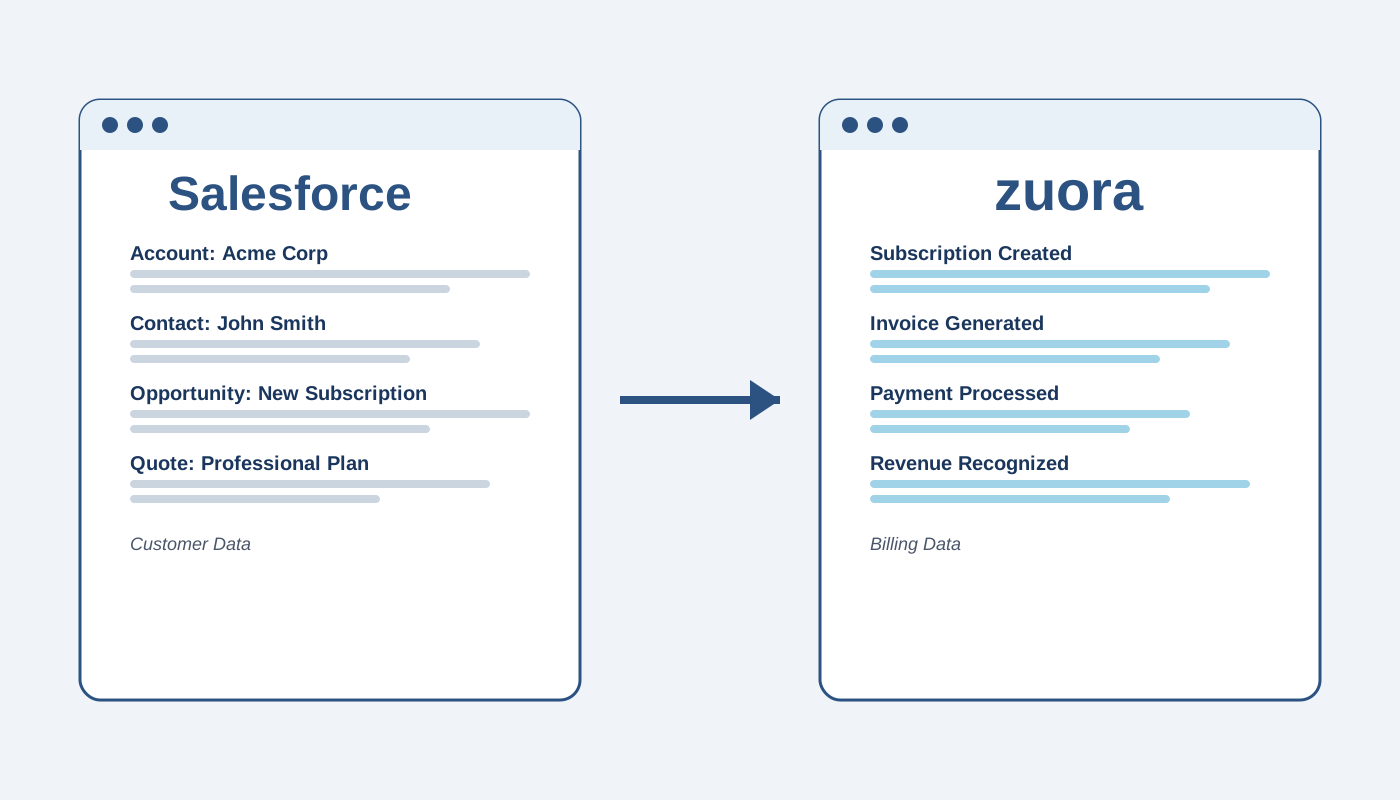
How to integrate Zuora and Salesforce
Managing subscriptions at scale is complex - handling recurring payments, cancellations, upgrades, and invoicing becomes exponentially challenging as your subscriber base grows. When using Salesforce alongside Zuora's subscription billing platform, integration is crucial for empowering your Go-To-Market and customer facing teams, such as sales, service, and success teams, to manage subscribers efficiently. This guide explores your integration approaches.
Read article
How to migrate from Zuora Subscribe and Amend to Orders
They say that change is the only constant in life, and that is especially true for e-commerce. Zuora users were recently faced with a big shift in how they run subscription commerce when Zuora announced the end of life for Subscribe and Amend .
Read article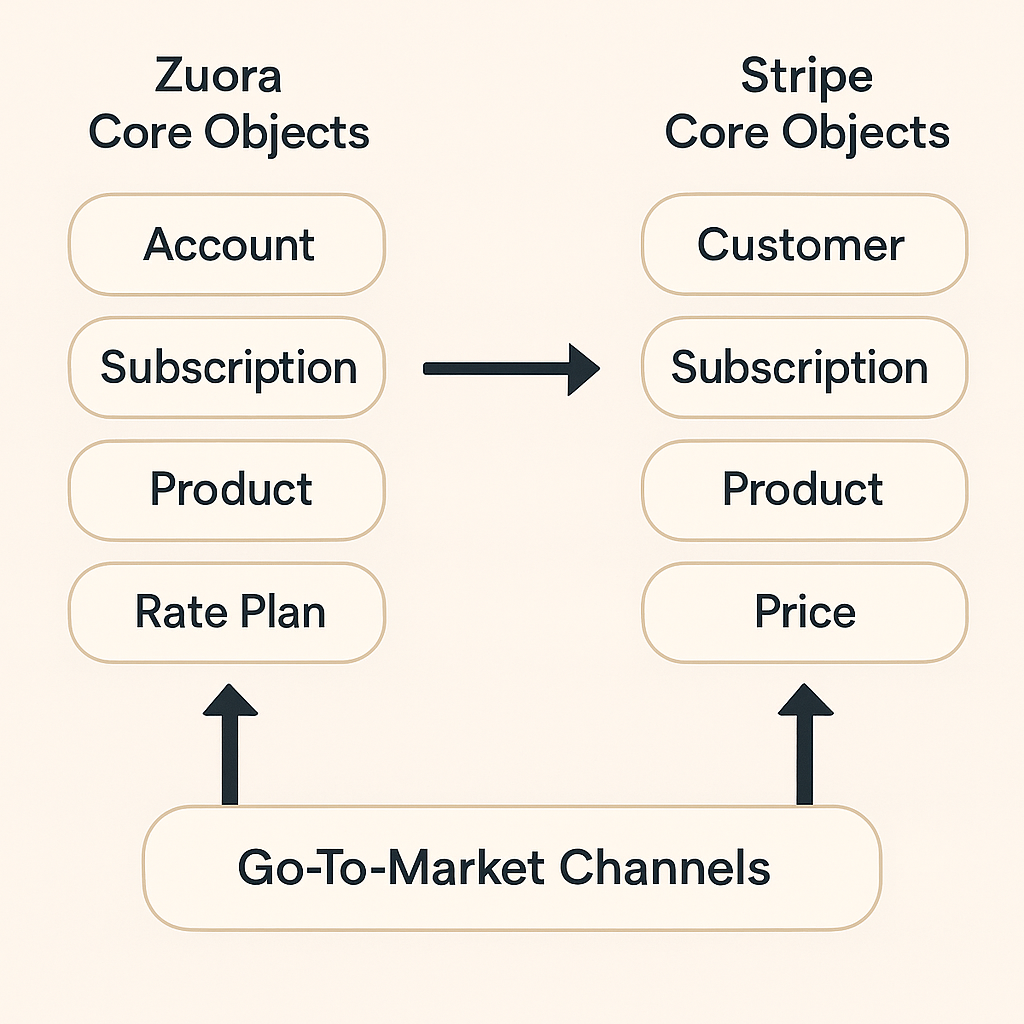
How to Move from Zuora to Stripe Billing
Switching your subscription billing platform can feel daunting – like rewiring the engine of a moving car. Yet many product and operations teams are considering just that: moving from Zuora (a powerful, enterprise-grade billing system) to Stripe Billing (a developer-friendly alternative). Whether it’s to simplify your tech stack, reduce costs, or gain agility, a migration can offer big benefits. But how do you execute this switch without disrupting your business? This guide will walk you through the process step by step, highlighting how to make the transition smoother (spoiler alert: a no-code commerce platform like Limio can take on much of the heavy lifting).
Read articleIntegrating Stripe Billing for a Self-Service Portal: Retention and Lifecycle Management for B2C Subscriptions
Your subscribers are on Stripe Billing - but what happens when they want to upgrade, downgrade, or cancel? Stripe's Customer Portal covers the basics, but B2C subscription businesses at scale need more: intelligent cancel/save journeys that retain subscribers, branded upgrade and downgrade paths, real-time Salesforce visibility, and no-code control for your commercial team. This guide explains how a commerce layer on top of Stripe Billing turns self-service from a cost centre into a retention engine.
Read articleIntegrating Stripe Billing in Your Website: A Commerce Layer for B2C Subscriptions
Stripe Billing is a great foundation for B2C subscriptions - but scaling beyond Stripe Checkout means building branded commerce experiences your team can control. This guide covers how Limio sits on top of Stripe Billing to deliver branded pricing pages on your domain, a modular no-code checkout with Stripe Elements under the hood, promo codes, cross-sell and upsell, purchase links, abandoned cart capture, full analytics with UTM attribution, and automatic Salesforce CRM sync for every order.
Read article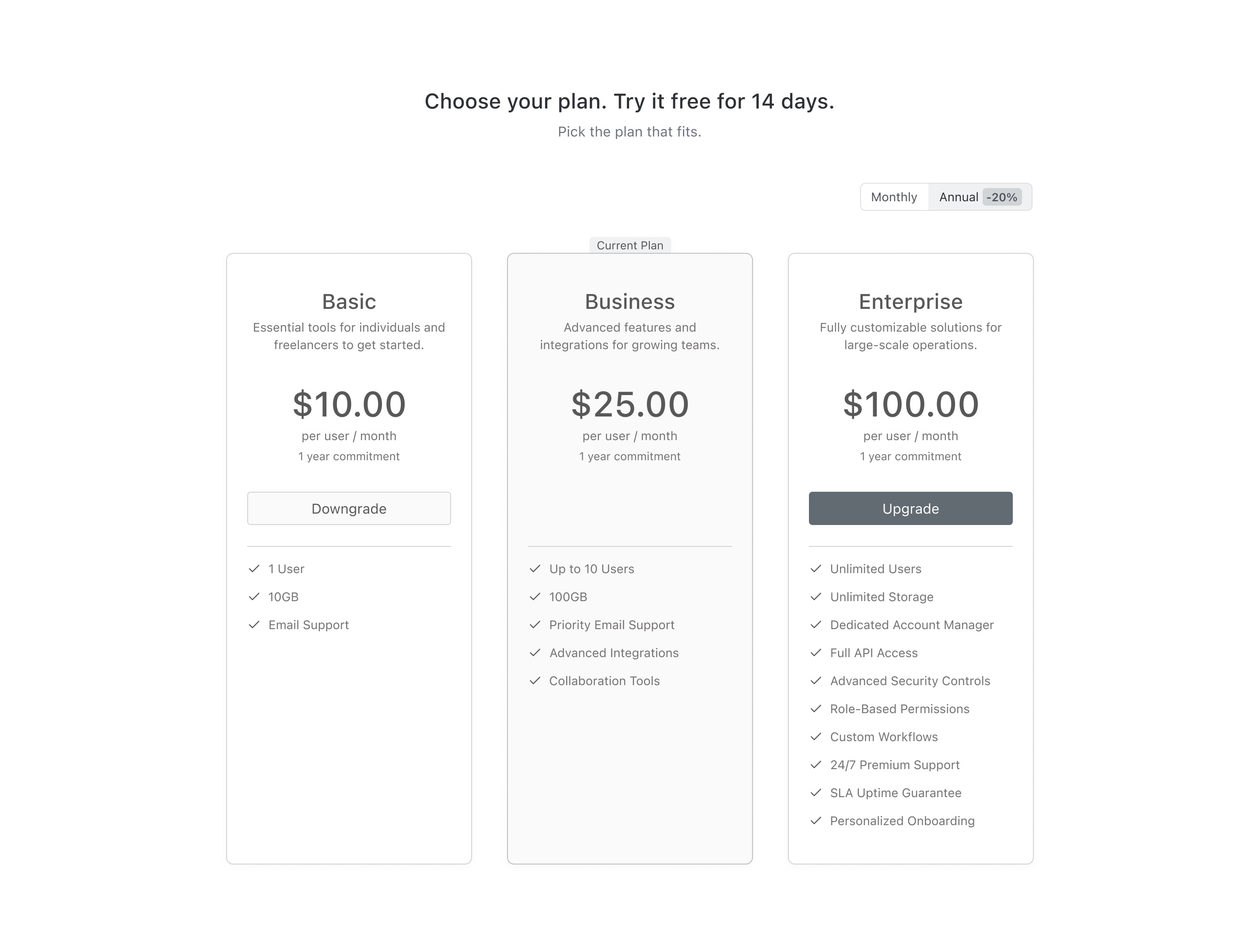
The full guide to integrating Zuora for a self-service portal
Self-service sounds simple until you try building it.
Read article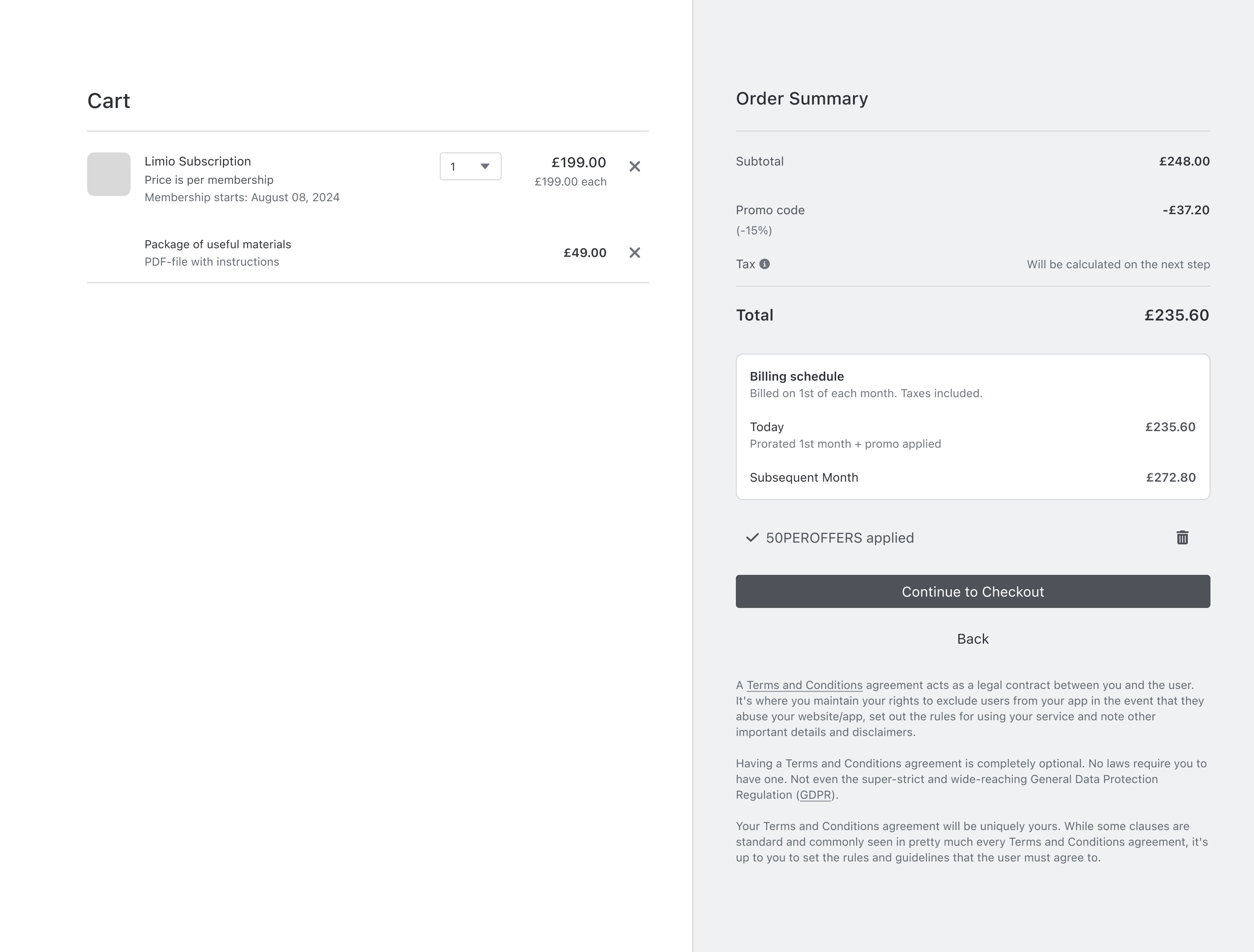
The full guide to integrating Zuora in your website
Giants like Shopify and Amazon have set the bar impossibly high. Today's customers demand lightning-fast performance, seamless mobile experiences, and bulletproof security—all while expecting instant gratification. For subscription businesses, the complexity multiplies. Beyond standard ecommerce challenges, you're juggling recurring billing, complex pricing models, and platform integrations with Zuora. This guide walks you through building a subscription ecommerce site from scratch, tackling everything from product pages to order orchestration, with practical solutions for the unique challenges of subscription commerce.
Read article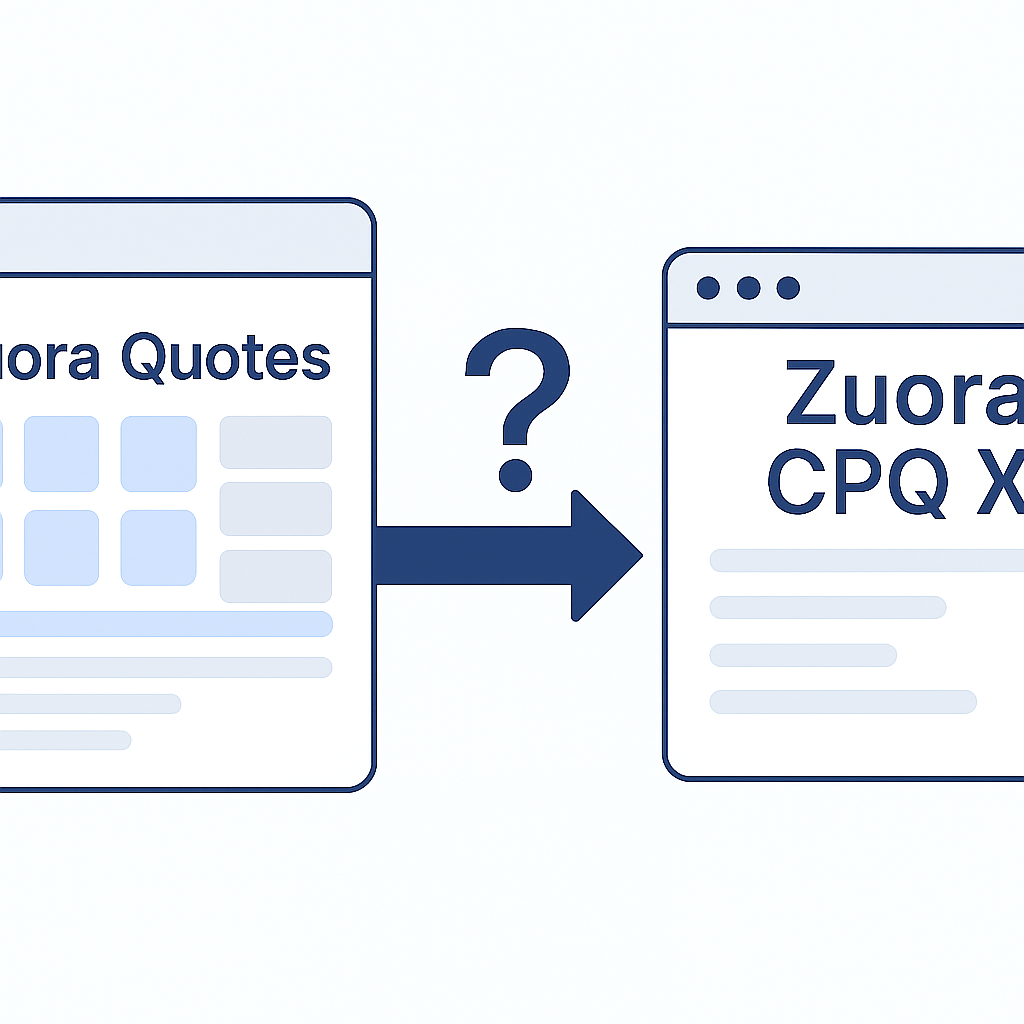
Upgrading from Zuora Quotes to Zuora CPQ X: Your Strategic Options
You may be exploring a move to CPQ X because your current Quotes implementation is beginning to show its age or because the upgrade feels like the natural next step. An early observation many teams make once a project is already underway is that the shift to CPQ X tends to behave less like an upgrade and more like a full reimplementation. It affects the data model, the custom logic woven into your existing flows, the way sales teams work with quotes and the downstream finance processes that depend on quote accuracy. For many organisations this translates into six to twelve months of focused effort. With that level of change in mind, it can be helpful to pause and ask how much transformation you are prepared to introduce at once and what it would take to support your users through it. Since most custom elements require rebuilding rather than migrating, this can also become a natural moment to reassess which parts of your current setup should be preserved, which might be simplified and which could benefit from a fresh design. If that amount of effort is already on the table, it may prompt a broader reflection on whether an omnichannel CPQ approach could meet evolving needs around hybrid sales models, multiple billing systems or partner quoting with a similar or even reduced level of investment. It can also open the door to considering how your quoting process should evolve over the next few years and whether CPQ X aligns with that longer term direction.
Read article