Integrating Stripe Billing in Your Website: A Commerce Layer for B2C Subscriptions
Stripe Billing is a great foundation for B2C subscriptions - but scaling beyond Stripe Checkout means building branded commerce experiences your team can control. This guide covers how Limio sits on top of Stripe Billing to deliver branded pricing pages on your domain, a modular no-code checkout with Stripe Elements under the hood, promo codes, cross-sell and upsell, purchase links, abandoned cart capture, full analytics with UTM attribution, and automatic Salesforce CRM sync for every order.
Stripe Billing is one of the best subscription billing engines available. Its pricing models are flexible, its payment infrastructure is world-class, and Stripe Elements gives developers a fast path to accepting payments. For many B2C subscription businesses, from membership organisations and consumer brands to content platforms and SaaS companies, Stripe is the natural choice for billing.
But billing is only half the story. When you're running a B2C subscription business at scale, the challenge isn't processing payments — it's everything that surrounds it. How do subscribers discover and compare your plans? How do you run promotional campaigns with promo codes and time-limited pricing? How do you cross-sell add-ons in the checkout? How does your marketing team know which campaigns are driving conversions? And how does your customer service team in Salesforce see what happened online?
This is where a commerce layer comes in. Limio sits on top of Stripe Billing to give B2C subscription businesses branded acquisition experiences, full commerce capabilities, and deep CRM integration - all without writing code or building custom integrations.
Stripe Checkout is a great starting point
Let's be clear: Stripe Checkout is excellent. It handles payment collection, supports many payment methods such as Apple Pay and Google Pay through Stripe Link, manages SCA compliance, and gets you live fast. For startups and early-stage businesses, it's often all you need.
But as your subscription business grows, you'll start hitting the edges of what a payment-first checkout can do. B2C subscription businesses need more than a payment form - they need a commerce experience.
Where B2C subscription businesses need more
The gap between a billing checkout and a commerce platform becomes clear when your commercial teams start asking questions like these:
Your marketing team asks: "Can we run a 20%-off promo code campaign for Black Friday, track which UTM source drove each order, and A/B test two different pricing page layouts - without filing an engineering ticket?"
Your product team asks: "Can we add a cross-sell for our premium add-on in the checkout flow, show an upsell on the confirmation page, and trigger an abandoned cart email if someone drops off?"
Your customer service team asks: "When a subscriber calls in, can we see exactly what they purchased, which promo code they used, and process a plan change from Salesforce?"
Your head of digital asks: "Can we host this on our own domain, control the SEO/AEO metadata, feed events into Google Analytics, and make it look like our brand - not like a third-party payment page?"
These aren't edge cases. They're table stakes for B2C subscription businesses operating at scale.
How Limio extends Stripe Billing for your website
Limio is a subscription commerce platform that connects to Stripe Billing via Stripe Connect. It doesn't replace Stripe - it gives your commercial teams a no-code layer to build, optimise, and operate the acquisition experience that sits in front of Stripe's billing engine.
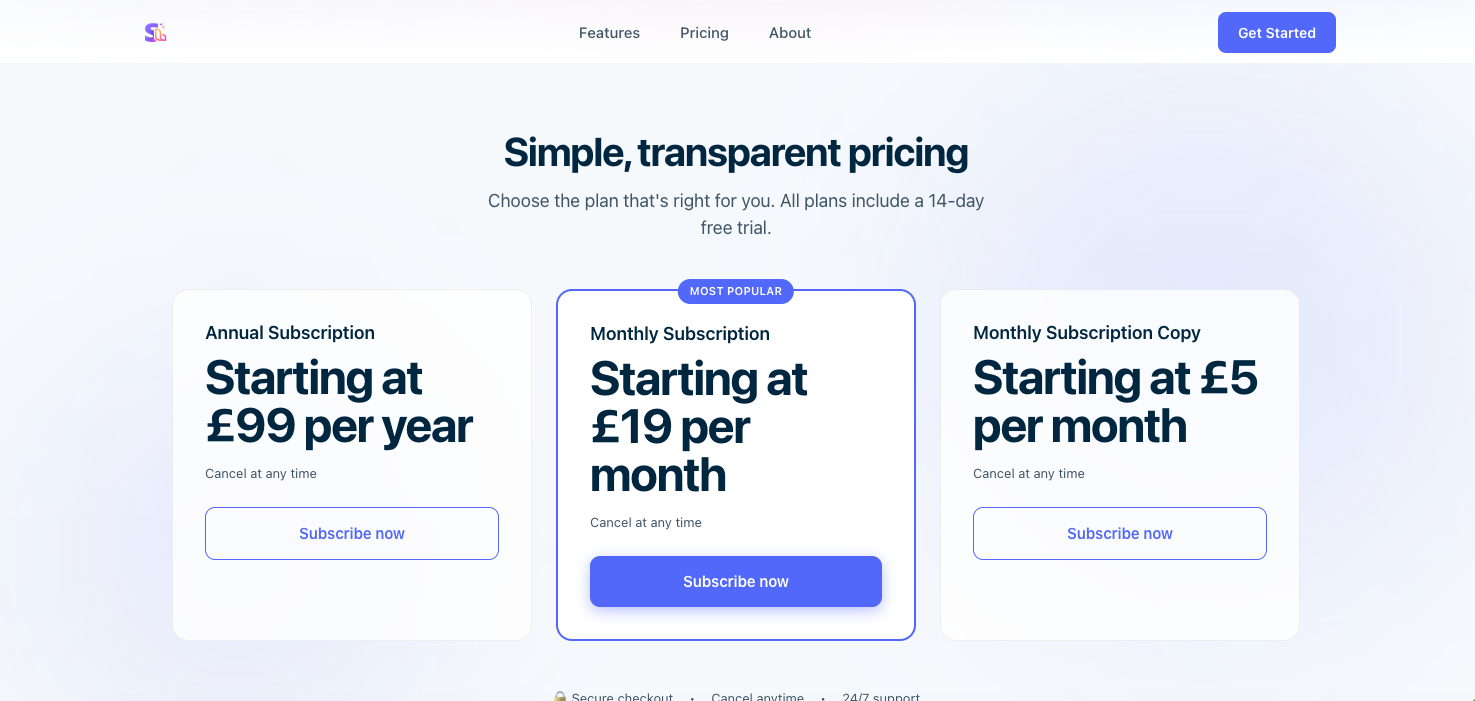
Branded pricing pages on your domain
With Limio, your pricing and offer pages are hosted on your own domain, built with your own brand, and fully controlled by your commercial team. Pages are created in a visual page builder with drag-and-drop components — offer cards, comparison tables, feature lists, CTAs — all without touching code. You manage SEO metadata (titles, descriptions, canonical tags, indexation rules) directly in the platform, so your pricing pages rank in search engines and are properly indexed, rather than sitting behind a Stripe-hosted URL that you don't control.
A modular, no-code checkout
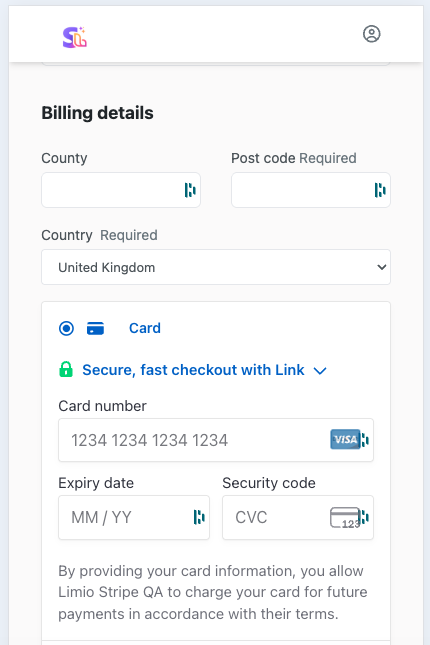
Limio's checkout is built on modular React components that your team configures without code. Under the hood, payments are captured via Stripe's Payment Element - so your customers still get the full power of Stripe Elements, including Link for one-click payments, support for cards, ACH, SEPA, and all the payment methods you've configured in Stripe. But the checkout experience itself is yours to design: you control the layout, the fields, the copy, and the flow.
The checkout supports multi-step flows, data capture forms, gift purchases, and configurable validation - all managed from the Limio page builder. You can embed the checkout on any page of your site using Purchase Links, which pre-populate the basket with specific offers and promo codes. This means your editorial team, email campaigns, or paid ads can link directly to a pre-configured checkout - no engineering required.
Promo codes, cross-sell, and upsell
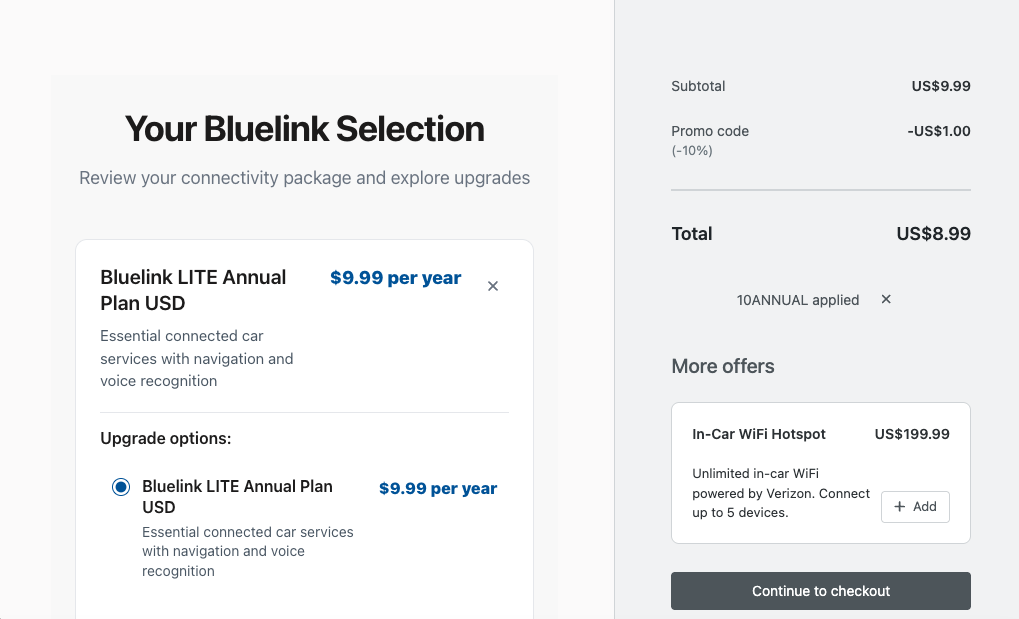
Limio gives your commercial team full control over promotional pricing without touching Stripe's product catalogue. Create and manage promo codes directly in the platform — percentage discounts, fixed-amount discounts, time-limited campaigns, single-use or multi-use codes — and distribute them via purchase links, on-page redeem components, or API. Promo codes can apply to the whole basket or to selected items, giving you the flexibility to run targeted promotions.
Cross-sell and upsell offers are configured at the offer level: when a subscriber adds a plan to their basket, related add-ons or upgrade offers appear automatically in the checkout. You control the display name, description, and eligibility rules, and the cart components handle the pricing logic, including promo code interactions.
Purchase links for any marketing surface
Purchase Links turn any touchpoint into a direct path to checkout. A purchase link is simply a URL that pre-populates the Limio basket with one or more offers and optionally applies a promo code. Use them in email campaigns, editorial content, social media, paid ads, QR codes, or paywalls — anywhere you want to shortcut the subscriber from interest to purchase.
For customer service teams, Limio for Salesforce can generate personalised Checkout Links tied to a specific subscriber, enabling agents to create bespoke deals and send them directly to the customer.
Abandoned cart capture and retargeting
Limio captures basket data as subscribers progress through the checkout, even if they don't complete the purchase. The Abandoned Basket API provides a single endpoint to retrieve incomplete checkouts with user data, which you can integrate with your email service provider or push notification system to trigger recovery campaigns. The data layer also fires events for each checkout step, so your analytics and marketing automation tools can segment and retarget based on where the subscriber dropped off.
SEO, AEO, and analytics built in
Because your pricing pages and checkout live on your domain, you get the SEO benefits that a hosted checkout page simply cannot deliver. Limio lets you configure meta titles, descriptions, canonical URLs, and indexation rules per page — meaning your offer pages can rank for high-intent search queries.
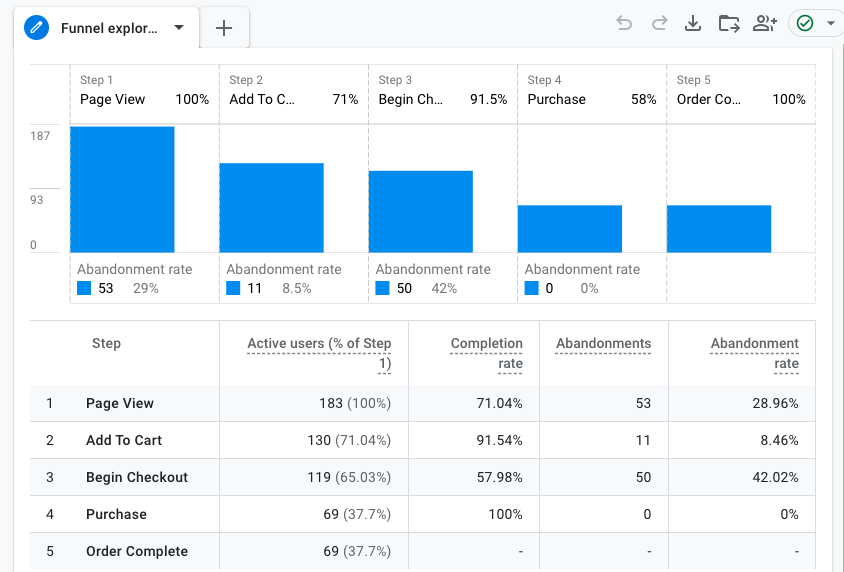
For analytics, Limio provides a data layer that fires standardised events (page views, add-to-cart, checkout steps, promo code applications, order completions) compatible with Google Tag Manager and any tag-based analytics platform. UTM parameters persist through the entire purchase flow and are attached to the Limio Order — so when the order flows to Salesforce or your analytics warehouse, you know exactly which campaign, source, and medium drove the conversion.
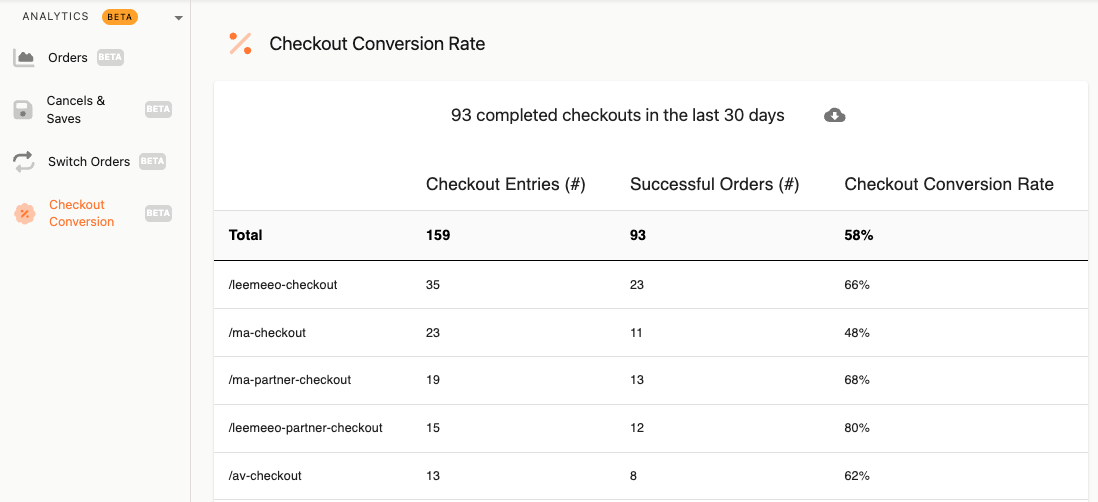
Limio's built-in commerce analytics dashboards give your team immediate visibility into new orders, renewals, cancel/save rates, switch orders, and revenue — filterable by source (online vs. Salesforce), offer, and time period. All reports are exportable for deeper analysis.
Fraud protection and security
Limio is built for payment funnels and takes security seriously. Google reCAPTCHA (v2 and v3) is integrated into the checkout to prevent bot submissions, with configurable thresholds and page placement options. Rate limiting protects payment token generation and order submission endpoints from abuse. The platform follows PCI DSS standards, supports only modern browsers with current security standards, and provides allowed-host configuration to restrict where your checkout can be embedded.
Extend with the SDK when you want to, now with AI
Limio's no-code page builder and component library cover the vast majority of B2C acquisition use cases out of the box. But when you want to go further, a custom pricing calculator, a dynamic offer selector, a specific content experience, Limio provides a React-based SDK that lets developers build custom components with full access to campaign data, basket state, and user context.
Components built with the SDK deploy through Limio's standard release pipeline and work alongside no-code components on the same page. This means your commercial team can manage 90% of the experience independently, while your engineering team focuses on the genuinely custom 10%. It's the best of both worlds - commercial agility with technical extensibility. And there's even more now than commercial team can do, thanks to Limio Skills.
Salesforce integration: every order flows to your CRM
This is where the architecture truly pays off for B2C businesses at scale. Every order processed through Limio - whether placed online via the shop or by a customer service agent via Limio for Salesforce - automatically flows to Salesforce as a Platform Event. Limio creates and manages Salesforce Account and Contact records, syncs order data (including offer details, pricing, promo codes applied, and UTM attribution), and keeps subscription state current.
This means your customer service team sees exactly what happened online: what the subscriber purchased, when, through which campaign, and with which promo code. Agents can also process new orders, switches, and cancellations directly from Salesforce using Limio for Salesforce - with the same offer catalogue, pricing rules, and promo code logic that applies on the website.
For your marketing team, having order data with full UTM attribution in Salesforce means you can finally close the loop on campaign performance. Your CRM becomes the single source of truth for subscriber acquisition - not a separate silo that requires manual reconciliation.
How it works: architecture overview
The architecture is straightforward:
Your Website (Limio Commerce Layer) → Stripe Billing → Salesforce CRM
Limio serves the subscriber-facing experience - pricing pages, checkout, purchase links - on your domain. When a subscriber completes a purchase, Limio processes the order through Stripe Billing via Stripe Connect, creating the Stripe Customer, Subscription, and Payment. Simultaneously, the order data flows to Salesforce via Platform Events, creating or updating the subscriber's CRM record with full order details and attribution.
Your commercial team manages offers, pricing, promo codes, pages, and campaigns in Limio. Your billing runs on Stripe. Your customer service and marketing teams operate in Salesforce. No custom integration code. No middleware. No engineering tickets to change a price or launch a campaign.
Getting started
If you're running a B2C subscription business on Stripe Billing and you're ready to move beyond Stripe Checkout to a full commerce experience, Limio connects in hours via Stripe Connect - not months of custom development.
Book a demo to see how Limio gives your commercial team control of branded acquisition experiences, while keeping Stripe as your billing engine and Salesforce as your CRM.
Your subscription business, on autopilot.
See how Limio can transform your commerce capabilities.