The 6-Month Checkout Problem: Why Subscription Flows Take Forever to Launch
Many subscription businesses find themselves waiting months to launch even a simple checkout flow. It’s not a limitation of Zuora or Salesforce; it’s the bottleneck of custom engineering, cross-team dependencies, and compliance hurdles. This delay stalls growth, kills experiments, and ties up valuable dev time. Limio provides a no-code commerce layer that works with Salesforce and Zuora to cut timelines from months to weeks, so teams can launch offers at market speed.
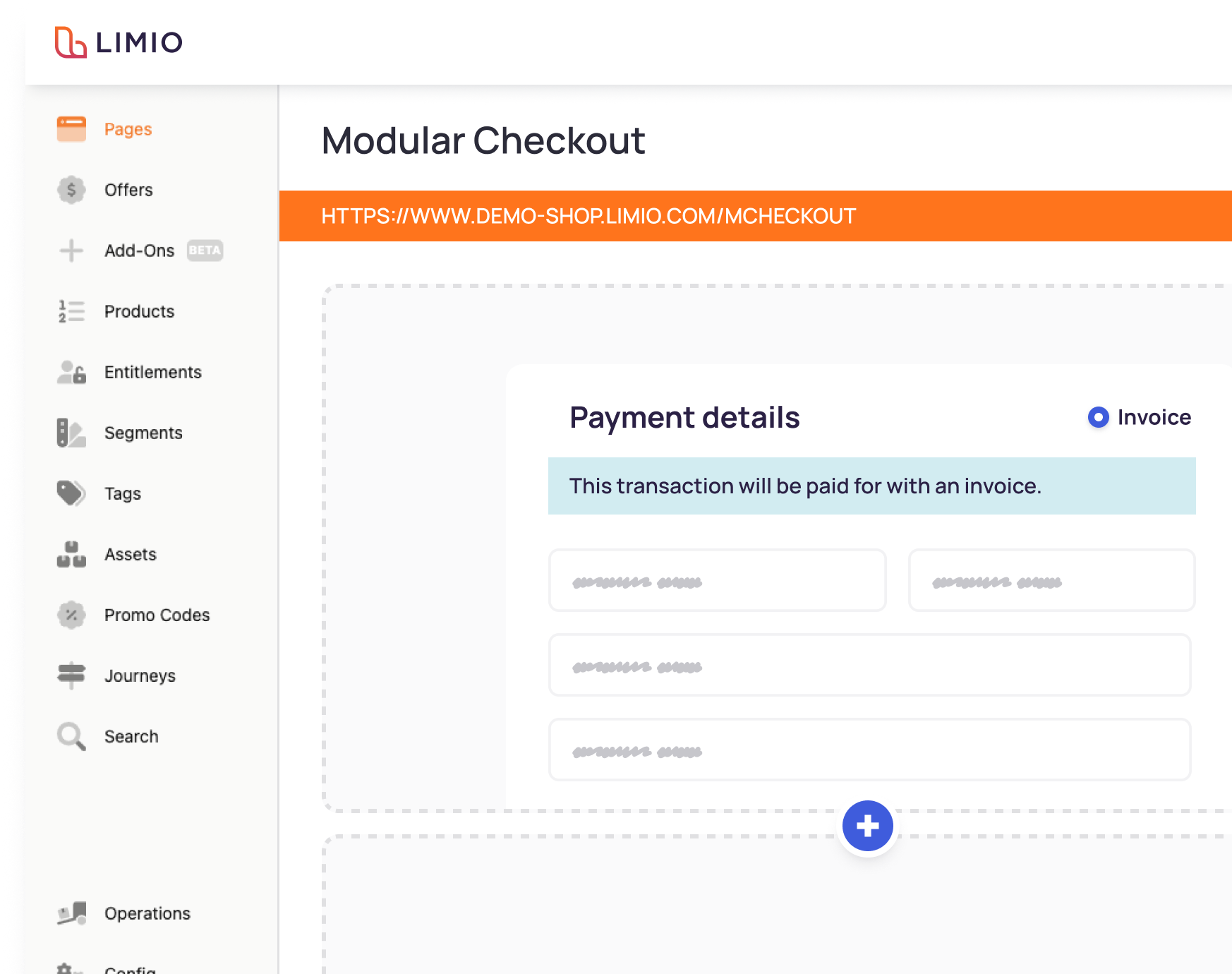
Every subscription business leader has faced the same frustration: a brilliant new offer is ready, but the checkout flow won’t be live for months.
On paper, your systems are powerful. Salesforce orchestrates the customer lifecycle. Zuora manages billing and revenue recognition. Your engineering team can build anything. Yet when it comes to launching a simple subscription checkout; the reality is often months of back-and-forth between product, engineering, and operations.
Why it takes so long
It’s not because the platforms can’t handle subscriptions. They can. But the gap lies in who has to build the customer-facing flow:
- Custom builds on APIs: Engineering needs to wire together Zuora rate plans, payment gateways, identity management, and Salesforce workflows.
- Cross-team dependencies: Marketing, product, and RevOps want control, but end up waiting on engineering sprints.
- Testing & compliance: Any new checkout needs QA for tax, payment methods, and PCI compliance. That alone can add weeks.
- Lack of extensibility: New checkout experiences such as sales-assisted checkouts, promo codes, or international currencies require more dev work.
By the time the flow is ready, the opportunity to capture momentum may already have passed. This comes with several hidden costs:
- Slow time-to-market for new offers.
- Lost conversion lift from pricing experiments that never launch.
- Engineering cycles spent on plumbing instead of product innovation.
How Limio changes the timeline
Limio provides a no-code commerce layer built to work with Salesforce and Zuora from day one. With Limio, teams can:
- Configure and launch checkout flows in weeks.
- Roll out new pricing or promotions without waiting for engineering.
- A/B test and experiment with new checkouts with no-code,
- Maintain compliance and accuracy by leaning on Zuora + Salesforce as systems of record.
The bottom line
Subscription businesses don’t lose deals because the billing system can’t handle them. They lose because it takes too long to roll out the experience customers need.
Limio solves the 6-month checkout problem: helping you move from idea to live offer at the speed your market demands.
Your subscription business, on autopilot.
See how Limio can transform your commerce capabilities.