What Omnichannel Means for the New RevOps Stack
For years, RevOps stacks were built around a single motion: sales-led buying. Today’s customers don’t move that way anymore. They flow between self-serve, sales, and partners - often within the same deal. Omnichannel is no longer a channel strategy; it’s a systems problem. This article explains why the old RevOps stack breaks down and what a truly omnichannel architecture requires.
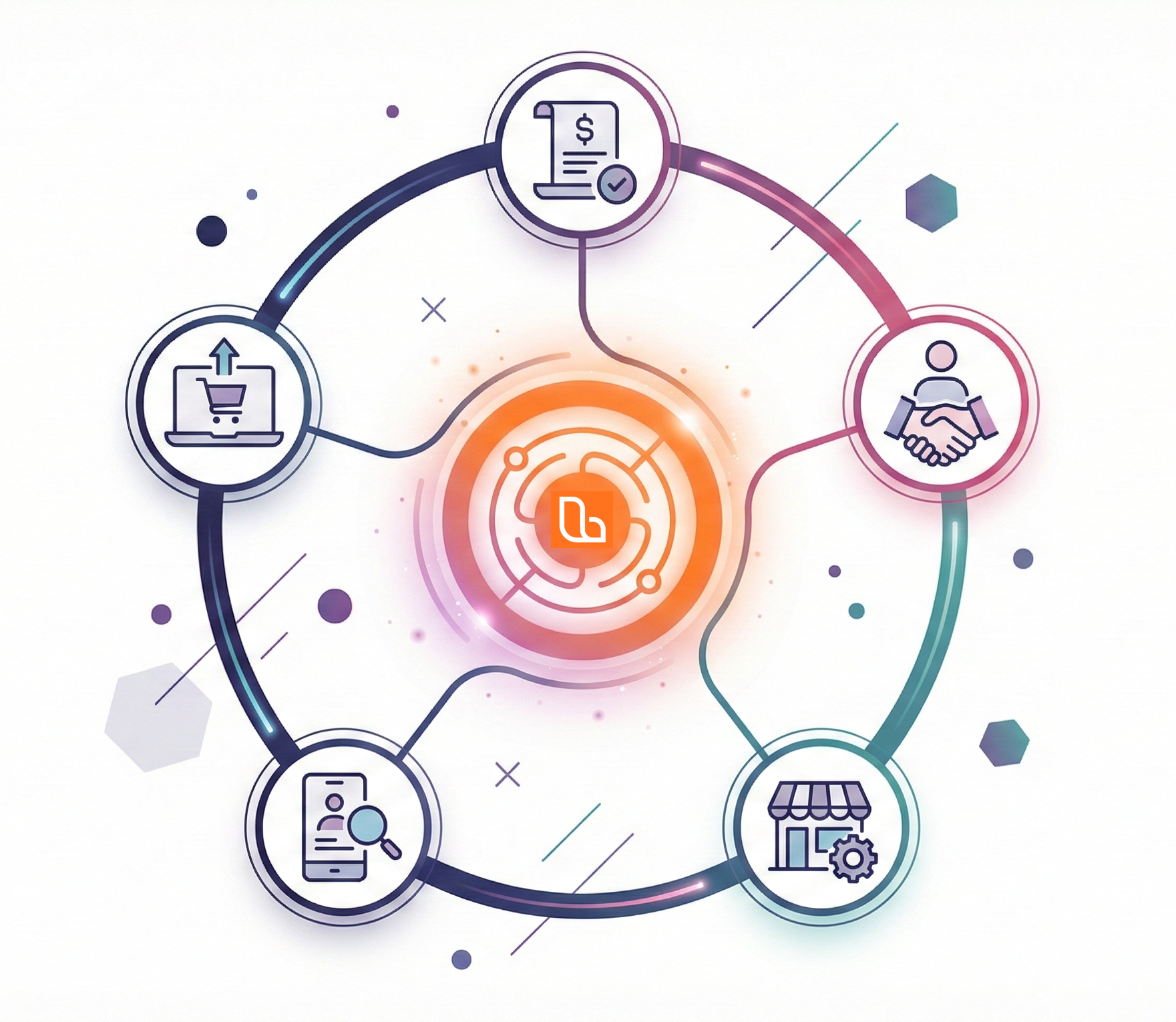
For years, revenue operations teams built their systems around one primary channel: sales. CPQ lived in the CRM, billing lived in the finance stack, and self-service was owned by Product and Engineering. Partner pricing and indirect channels were handled manually by sales or partner managers, sometimes with the CPQ. It worked as long as customers bought in predictable ways. Those days are gone.
Modern customers move freely between channels. They start online, request a sales call, and complete the transaction in a self-serve checkout. Or they receive a partner-led introduction, expand their plan with an internal sales rep, and manage their renewals in a customer portal.
This new reality requires a fundamentally different RevOps architecture. Omnichannel is not a marketing buzzword. It is an architectural requirement for how revenue systems must operate.
Why the old RevOps stack cannot keep up
Most legacy stacks were never designed to support hybrid selling motions. As a result, they create misalignment across the customer lifecycle. Common issues include:
- Different catalog definitions across systems and SKUs proliferation. For example: the website shows one set of plans while CPQ uses another.
- Conflicting price versions; discounts and promotions applied in CRM never make it to checkout or partner portals.
- Different entitlement logic by channel; a customer buying through self-serve receives different access than a customer buying through a rep.
- Partner and Sales pricing that is not linked to the core product catalog; manual overrides turn into long-term inconsistencies and difficult approval processes.
These inconsistencies are not just operational burdens. They directly slow monetization by increasing approval cycles, creating rework for sales, and creating confusion for customers. It hinders the ability for the business to grow efficiently.
What omnichannel really demands from RevOps
The shift to omnichannel is not merely about offering multiple ways to buy. It requires that every channel draws from the same underlying truth. That truth is the product catalog, the pricing engine, and the entitlement rules. Three capabilities define an omnichannel RevOps stack:
I. One catalog powers all channels.
Website, CPQ, partner quotes, self-serve flows, and customer portals must rely on one definition of products, offers, and entitlements. The moment each surface defines pricing separately, the entire system drifts.
II. A unified quote and order lifecycle.
A customer who starts online should be able to pick up with a rep without recreating a quote. A partner-initiated opportunity should translate cleanly into the CRM. All channels need to read and write to the same quote object.
III. Entitlement logic that works everywhere.
Customers should receive the same access regardless of where they purchased it. Entitlement rules must be consistent across sales-led, digital, and partner-driven transactions.
When these elements align, RevOps regains control. You’ll experience that new plans and addons become easy to launch, prices are now staying consistent, and renewals are flowing cleanly. Partner channels will stop being exceptions and begin behaving like first-class citizens. As Jessica Shivetts, Senior Manager, Revenue Operations, from JazzHR puts it in a recent case study:
“Limio gives us agility. I can make changes myself without tapping engineering.”
The real challenge: systems that must work together
Building an omnichannel RevOps stack is not about purchasing more tools. It is about eliminating silos across the tools you already have. Three areas usually need the most attention:
- CPQ and self-service: These systems often operate independently, which leads to mismatched pricing and broken upgrade paths.
- CRM and partner workflows: Partner quotes and channel-specific pricing logic often live in spreadsheets or isolated portals, completely disconnected from the main system of record.
- Billing and entitlement management: Billing may use legacy product definitions that do not match the catalog used by CPQ or the website.
The result is friction everywhere - manual work for ops teams, inconsistent customer experiences, and slower revenue cycles.
What the new RevOps stack looks like
An omnichannel RevOps architecture introduces a different pattern. Instead of separate systems for each channel, there is a shared layer that governs everything:
- A single catalog powering CPQ, self-service checkout, and partner pricing
- A quote object that moves between channels without rework
- Workflow automation that handles upgrades, downgrades, and renewals consistently
- A unified entitlement engine that sets access once and applies it everywhere
This unified spine lets RevOps support every selling motion without creating parallel processes or channel-specific exceptions.
Why this architecture is becoming a competitive advantage
Customers expect consistent pricing and immediate action. Sales teams expect to pick up online opportunities without creating new quotes. Finance teams expect clean data and predictable revenue. Partners expect clarity on what they can sell.
When the RevOps stack meets these expectations through an omnichannel architecture, businesses get:
- Faster time to launch new offers
- Fewer errors and fewer approval loops
- A checkout experience that aligns with CPQ
- A partner ecosystem that can scale without losing control
- Cleaner renewals and fewer disputes
- A stronger customer experience at every touchpoint
What used to be back-office plumbing now becomes a growth driver.
“The biggest win for us is agility and flexibility.” — Jessica Shivetts, Sr. Manager, Revenue Operations, Employ Inc.
Well thought out omnichannel
Omnichannel monetization is no longer optional. It is the default state of modern buying. For RevOps, this means building a stack that no longer thinks in channels but in shared definitions, shared logic, and shared workflows.
The new RevOps stack is unified, catalog-driven, and designed for fluid customer journeys - and Limio is building it. Contact us if you want to learn more!
Your subscription business, on autopilot.
See how Limio can transform your commerce capabilities.