13 Ways to Improve Your Checkout in B2B SaaS
Your checkout is not just a form. It is the most critical conversion point in your entire subscription business. In B2B SaaS, where deal values are higher and buying cycles are longer, every point of friction at checkout costs you real revenue. Yet most SaaS businesses treat their checkout as an afterthought — a static page built once by engineering and rarely optimised. You are leaving money on the table. Here are 13 ways to change that.
1. Recover abandoned carts with automated email campaigns
Cart abandonment is one of the biggest revenue leaks in subscription commerce — and for many B2B SaaS companies, it is a gap they have zero capability to address today. When a prospect starts your checkout but does not complete the purchase, that intent data is gold. An abandoned cart recovery flow captures open baskets, waits a configurable period, and then triggers a personalised email with a recovery link that brings the customer back to a pre-filled cart — often with an incentive like a 10% promo code to close the deal.
The impact is immediate and measurable. For companies with significant trial-to-paid conversion funnels, abandoned cart recovery is often the single fastest lever to improve conversion rates. Even a modest recovery rate translates directly to incremental revenue that would otherwise be lost entirely.
With Limio, the Abandoned Basket API captures every incomplete checkout and makes the data available for remarketing — whether through email, Slack notifications to your sales team, or integration with your existing marketing automation stack.
2. Use promo codes to drive urgency and close deals
Promotional codes are one of the most versatile tools in subscription commerce. They work across the entire customer lifecycle — acquisition campaigns, winback offers, partner incentives, seasonal promotions, and retention saves. In B2B SaaS, a well-timed promo code can be the difference between a closed deal and a lost prospect.
The key is making promo codes a first-class feature of your checkout, not an engineering project every time marketing wants to run a campaign. Your team should be able to create, manage, and deploy promo codes without developer involvement — including percentage discounts, fixed amount off, free trial extensions, and codes tied to specific customer segments or partner channels.
With Limio, promo codes are natively integrated into the checkout experience. Codes can be applied manually by customers, auto-applied via recovery links, or embedded in campaign URLs — all configurable by your revenue team.
3. Present upsells at the point of purchase
The checkout is one of the highest-intent moments in your buyer's journey. They have already decided to buy — which makes it the perfect time to present an upgrade. Upselling at checkout means showing the customer a higher-tier plan that offers more value, right when their purchase intent is at its peak.
The best upsell experiences are contextual and non-intrusive. Rather than interrupting the flow, they present a clear comparison: "For just £X more per month, you get Y additional features." When done well, upsells increase average revenue per cart without adding friction to the purchase process.
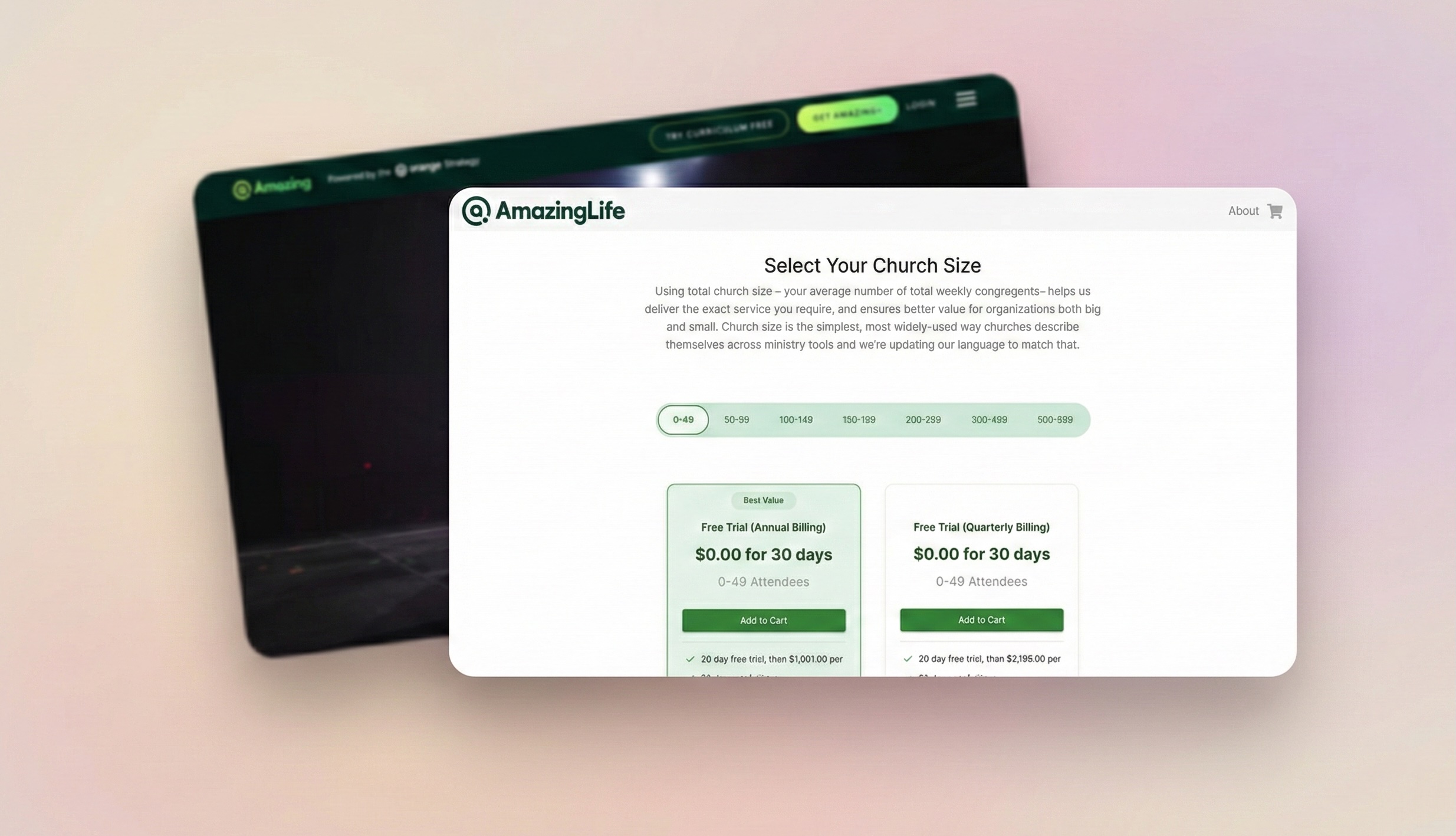
With Limio, upsell components are configurable within the modular checkout — you define which offers qualify as upsells, and the component presents them dynamically based on what is currently in the basket. No hardcoding required.
4. Cross-sell complementary add-ons
Cross-selling is the art of presenting compatible add-ons alongside the primary purchase. In B2B SaaS, this might be an advanced analytics module, priority support, additional user seats, or a complementary product that works alongside the base subscription.
Like upsells, the checkout is an ideal moment for cross-sells because the customer is already in a buying mindset. The difference is that cross-sells add to the order rather than replacing it. The result is higher revenue per transaction and deeper product adoption from day one.
Limio's cross-sell components work alongside the cart, automatically presenting compatible add-ons based on the current basket contents. Compatibility rules ensure that only relevant add-ons are shown — keeping the experience clean and the recommendations useful.
5. Streamline with a single-page checkout
Every additional step in your checkout flow is an opportunity for drop-off. Multi-page checkouts with separate screens for contact details, billing address, and payment information create unnecessary friction — especially in B2B where the buyer may be interrupted and need to return later.
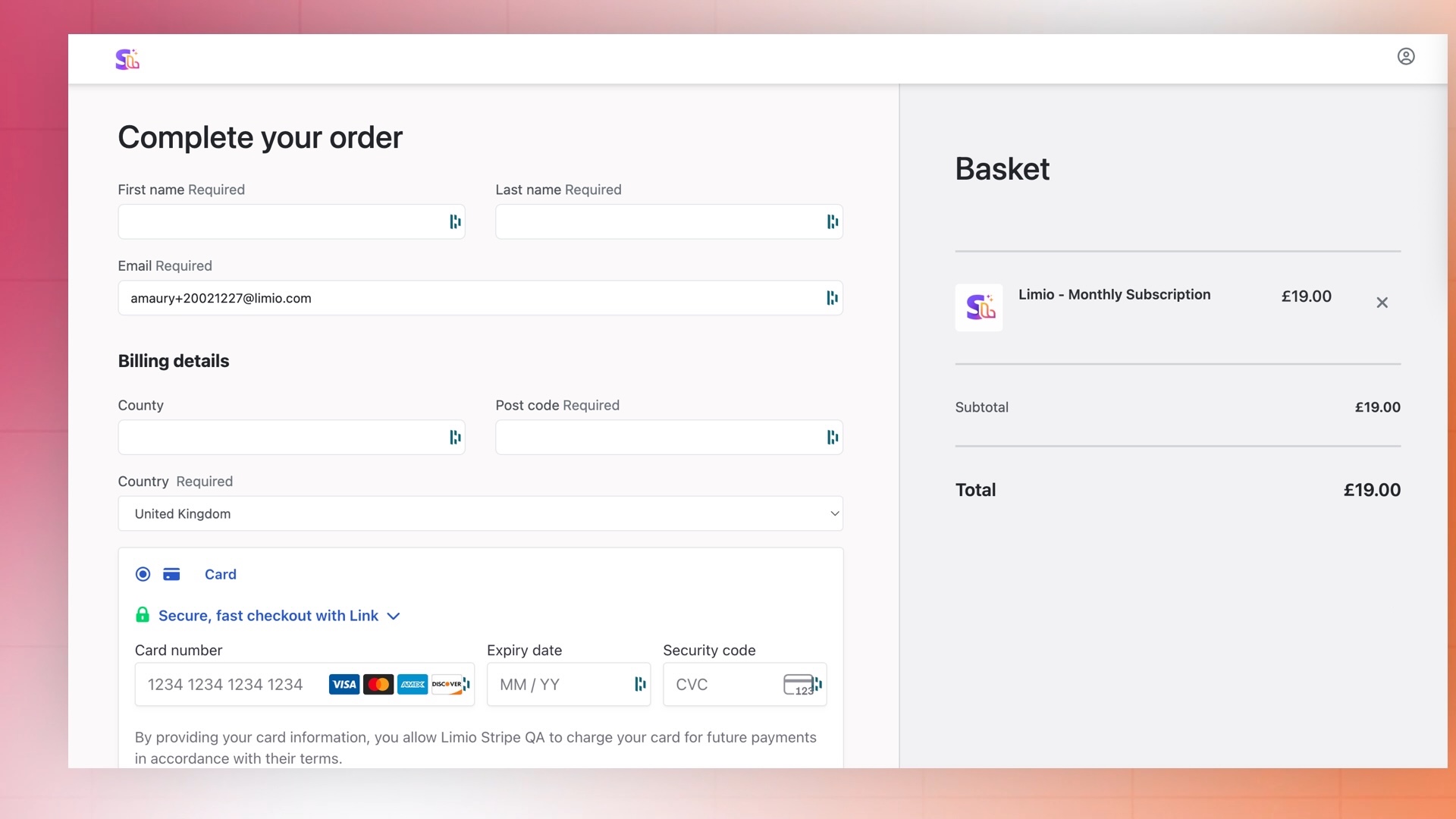
A single-page checkout consolidates the entire purchase flow into one screen: customer details, payment method, order summary, and confirmation. The buyer sees everything at once, understands exactly what they are committing to, and can complete the purchase in seconds rather than minutes.
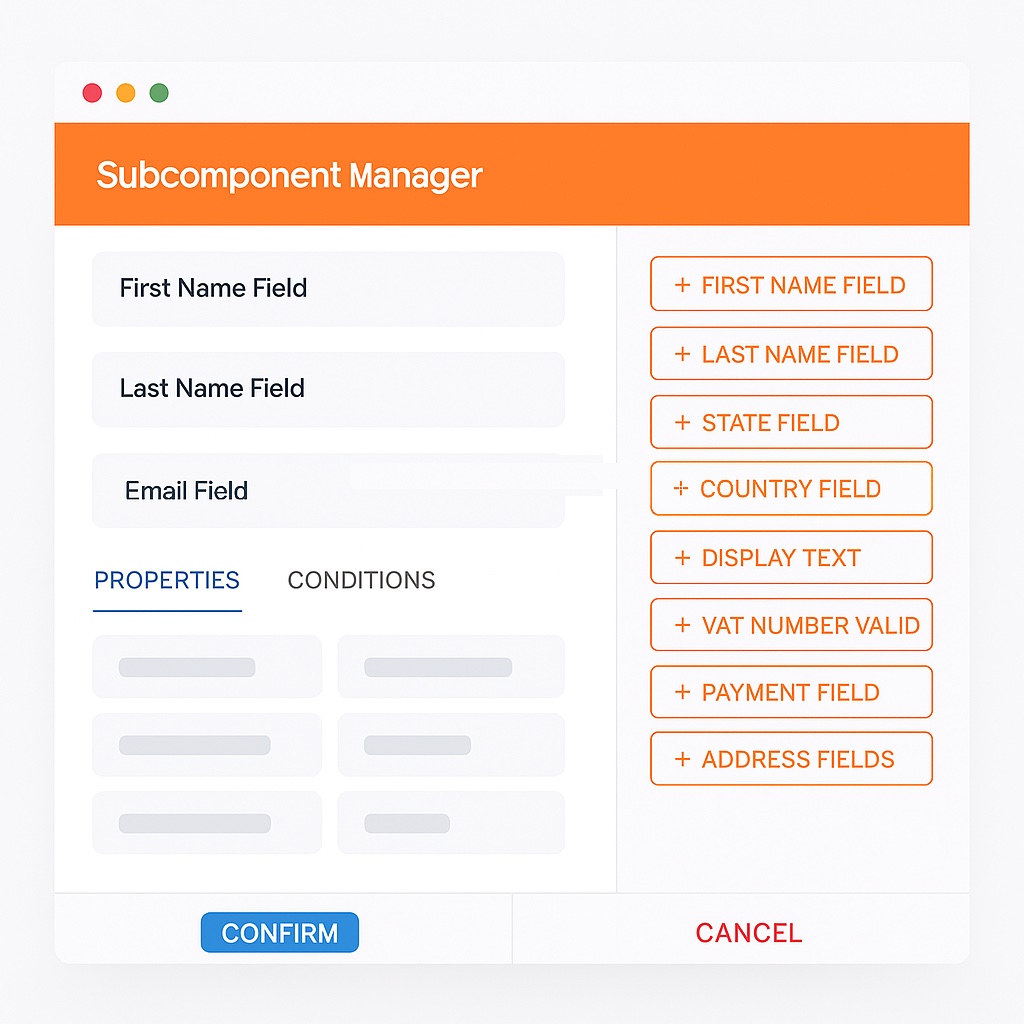
Limio's Modular Checkout is built around this principle — flexible subcomponents that can be arranged on a single page, giving you full control over the layout without sacrificing the data collection your business needs.
6. Enable guest checkout for faster conversion
Requiring account creation before purchase is one of the most common conversion killers in B2B SaaS. Not every buyer is ready to create an account — especially during a first purchase or when evaluating your product. Forcing registration adds friction and gives the buyer another reason to abandon.
Guest checkout — or anonymous purchasing — allows customers to complete a transaction without logging in or creating an account upfront. The account can be provisioned automatically after purchase, or the buyer can be prompted to set up credentials as part of the post-purchase flow.
With Limio, anonymous checkout is supported natively. Features like Apple Pay express checkout allow customers who are not logged in to complete their purchase without going through a standalone checkout screen — reducing the path from intent to conversion to just a few taps.
7. Auto-populate fields from identity providers
Every field your customer has to fill in manually is a friction point. If a buyer is already authenticated — through an SSO provider, an existing account, or a third-party identity service — there is no reason to ask them to re-enter their name, email, company, or contact details.
Auto-population means pulling known customer data into the checkout form automatically, so the buyer only needs to confirm rather than re-type. This is particularly valuable in B2B SaaS where buyers often come through an existing portal or identity provider that already holds their profile information.
Limio's modular checkout supports pre-population from identity providers as a built-in best practice. If the customer is authenticated, fields like first name, last name, email, and company are filled automatically — accelerating input and reducing errors.
8. Prefill addresses with address lookup services
Typing a full billing or shipping address is tedious, error-prone, and — on mobile — genuinely painful. Address prefill services like Loqate allow customers to start typing their address and select from validated suggestions, completing the entire address block in two or three keystrokes.
Beyond convenience, address validation reduces failed deliveries, incorrect billing records, and the downstream operational cost of cleaning up bad data. For B2B SaaS companies operating across multiple regions, it also handles international address formats automatically.
Limio integrates with address prefill services like Loqate directly within the modular checkout, providing validated address suggestions as the customer types — one of the simplest checkout improvements with one of the highest impact-to-effort ratios.
9. Offer express payment methods
The fewer steps between "I want to buy" and "purchase complete," the higher your conversion rate. Express payment methods like Apple Pay, Google Pay, PayPal, and Stripe Link let customers pay with a single tap or click — bypassing the manual entry of card numbers, expiry dates, and CVV codes entirely.
In B2B SaaS, payment method flexibility matters for another reason: cost. ACH and direct debit payments carry significantly lower processing fees than credit cards. Offering these alongside express checkout options gives your customers choice while protecting your margins.
Limio supports a broad range of payment methods through its billing integrations, including credit and debit cards, ACH, Apple Pay, Google Pay, PayPal, and more. Payment methods are configurable per checkout without engineering involvement.
10. Make your checkout mobile-responsive
This one should go without saying, but an alarming number of B2B SaaS checkout flows are still built primarily for desktop — and it shows. Buttons that are too small to tap, forms that overflow the screen, payment fields that do not resize properly. For SMEs and smaller businesses, mobile is often the primary device. A founder evaluating your product on their phone during a commute is not going to switch to a laptop to complete the purchase.
Mobile-responsive checkout is not just about resizing elements. It means designing for thumb-friendly interactions, minimising keyboard input, leveraging native mobile payment methods, and ensuring the entire flow — from pricing page to order confirmation — works flawlessly on any screen size.
Every Limio checkout and pricing page component is built mobile-responsive by default. Whether your buyer is on a desktop workstation or a mobile phone, the experience adapts automatically — no separate mobile build required.
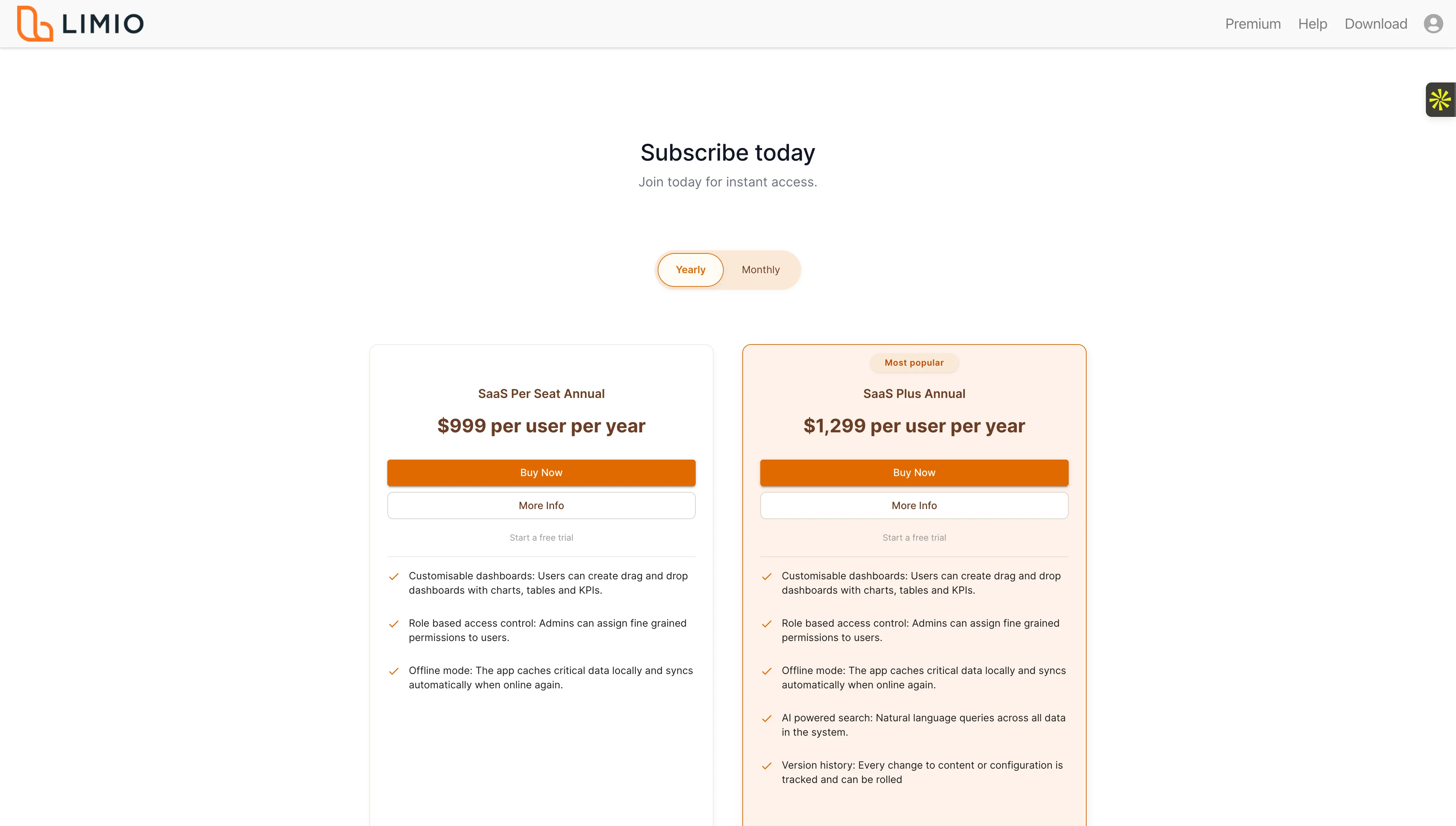
11. A/B test your checkout to find what converts
Most B2B SaaS companies have never tested a single variation of their checkout. The layout, the copy, the field order, the CTA text, the number of steps — all set once by an engineer and never revisited. This is leaving money on the table.
A/B testing your checkout means running controlled experiments to compare different versions: Does a two-step checkout outperform a single page? Does showing the upsell before or after payment details convert better? Does removing the company name field reduce abandonment? The answers are often surprising and always valuable.
Limio's platform natively supports A/B testing across your entire commerce experience — including checkout flows, pricing pages, and offer presentations. You can run experiments, measure conversion differences, and roll out winners without writing a line of code.
12. Adapt your checkout for partners and resellers
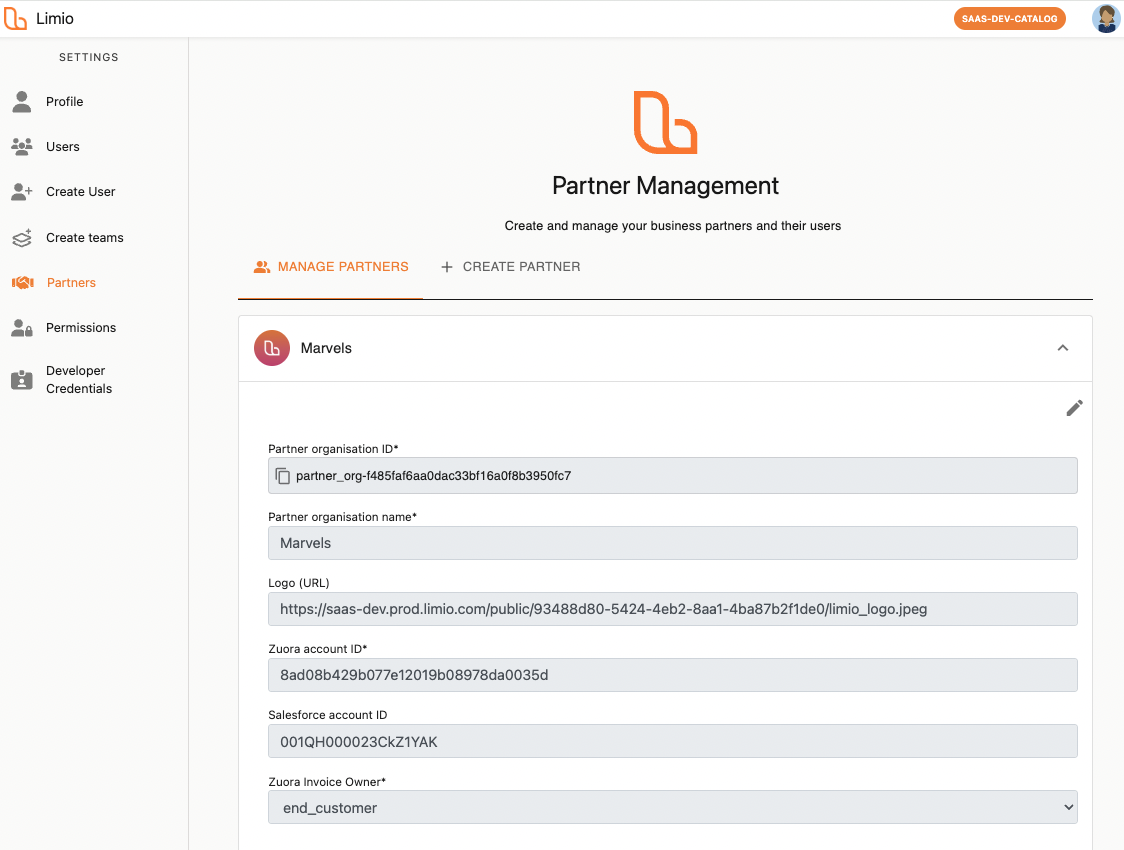
If you sell through channel partners, resellers, or distributors, your checkout needs to work for more than just direct customers. Partners need their own branded experience — with their own pricing, their own promo codes, and the ability to place orders on behalf of their end customers.
A partner-adapted checkout means each reseller gets a dedicated portal with governed pricing, partner-specific offers, and the ability to manage their customer base through a self-service experience. The partner logs in, selects offers, places orders, and manages subscriptions — all through a checkout that is tailored to their relationship with you.
Limio's Partner Portal provides exactly this: a fully configurable partner commerce experience built with the same page builder and checkout components as your direct channel — but with partner-specific authentication, pricing rules, and customer management capabilities. Learn how to set one up →
13. Support sales-assisted checkout for complex deals
Not every B2B deal closes through self-serve. For enterprise customers, complex configurations, or high-value contracts, your sales team needs the ability to build a quote and send the customer a checkout link to complete the transaction — combining the efficiency of digital checkout with the personalisation of a sales-led process.
Sales-assisted checkout bridges the gap between your CRM and your commerce platform. A sales rep creates an opportunity in Salesforce, configures a quote with the right products, pricing, and any negotiated discounts, and generates a checkout link. The customer clicks the link, reviews the pre-configured order, enters payment details, and completes the purchase — no manual order processing required.
With Limio for Salesforce, sales reps can select offers, apply promo codes, and generate a checkout link directly from the Salesforce opportunity. The customer completes the order through a fully branded checkout, and the transaction flows back to both your CRM and your billing system automatically.
The checkout is your revenue engine
These 13 improvements are not theoretical. They are the features that leading B2B SaaS companies are deploying today to increase conversion rates, grow revenue per cart, and reduce the operational burden on their engineering teams. From abandoned cart recovery — which can be the single fastest lever to improve trial-to-paid conversion — to partner portals that open up entirely new distribution channels, your checkout is the infrastructure that powers revenue growth.
The common thread across all 13 is that these should be capabilities your revenue team can configure and optimise without depending on engineering cycles. If changing a promo code requires a deployment, if testing a new checkout layout means a sprint of developer work, if adding Apple Pay is a quarterly project — you are moving too slowly.
Limio is the subscription commerce platform that puts all 13 of these capabilities in the hands of your business team. One platform powering your direct checkout, your partner portals, your sales-assisted flows, and your self-service experience — all integrated with your billing system.
Your subscription business, on autopilot.
See how Limio can transform your commerce capabilities.