Your Best Pricing Trick Dies the Day an Agent Handles the Renewal
Most subscription businesses make their money the same way: win the customer with a first-year discount, then quietly raise the price at renewal and count on inertia. That trick only works on a human who forgets to shop around. The buyer at your next renewal might not be human — and agents don't forget.
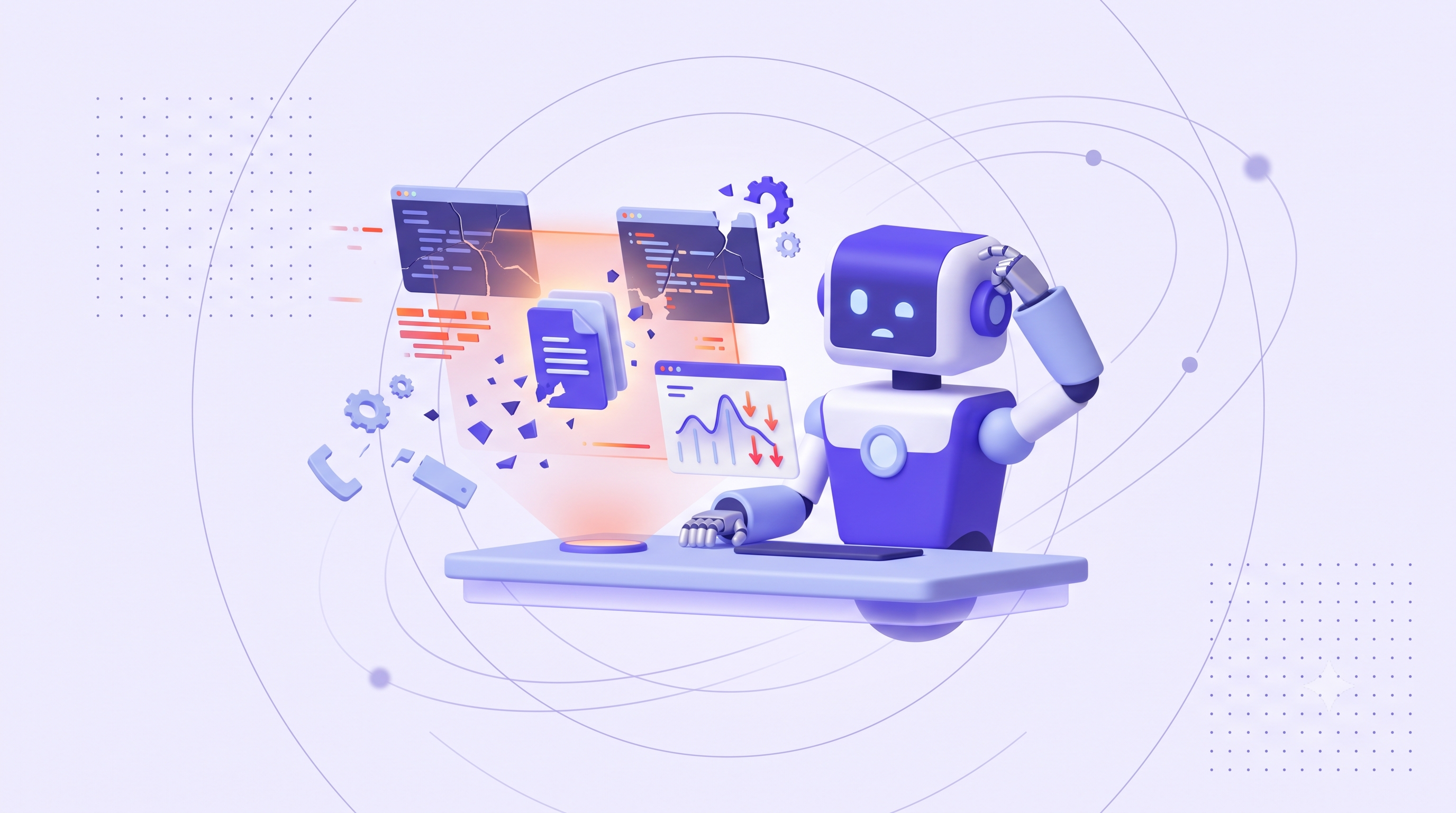
There's a quiet assumption baked into almost every subscription pricing model. Discount the first year to win the deal, raise the price at renewal, and rely on the customer not noticing or not bothering to switch.
For years that's been a safe bet. Renewals run on inertia. Cancelling is a hassle, comparing alternatives is a chore, and most people just let it roll.
That bet is starting to look shaky. The buyer sitting across from your renewal isn't always a person anymore. Increasingly it's an agent — ChatGPT, Claude, Gemini, or a purpose-built assistant — sent to check whether the customer is still getting a fair deal.
And an agent doesn't feel the friction that made your renewal safe. It doesn't forget. It doesn't dread the switch. It reads your renewal quote, compares it to three alternatives, and flags the 22% increase in the time it takes a human to find the login page.
One team we work with put it plainly: the "big discount year one, full price at renewal" model is built for a buyer who won't do the math. Agents always do the math.
The renewal was always the most profitable moment. It's now the most exposed.
Renewals are where subscription businesses make their margin. First-year discounts of 15–20% are standard, and the plan is to recover that — and then some — at renewal. Recurly's data on 76 million subscribers shows annual plans deliver 50–60% higher revenue per user than monthly, precisely because that annual renewal date is where value gets re-set.
The catch: that model quietly depends on the customer not paying close attention on renewal day.
Poorly communicated price increases already spike churn by around 35%. The only reason more customers don't leave is that noticing, comparing, and switching is work. Take the work away and the picture changes fast.
That's exactly what agents do. They take the work away.
What changes when the buyer is an agent
An agent handling a renewal behaves nothing like a distracted human.
It reads the renewal terms in full, including the increase you were hoping would slide through. It pulls up two or three competitors and lines up the prices. It has no memory of your onboarding, no relationship with your account manager, and no attachment to your logo. It optimises for one thing: the best deal for the person it works for.
So the renewal stops being a formality and becomes a live negotiation — every single year, on every single account. The sweetener you used to throw in to save a churning customer (a free add-on, a loyalty credit) now has to be offered to a machine that treats it as one more line in a comparison.
This hits commoditised subscriptions hardest. If your product looks interchangeable with two others, an agent will treat it as interchangeable and flip to whoever's cheapest in year one. Brand loyalty was doing a lot of quiet work in your renewal numbers. Agents don't have any.
What to do about it
You can't stop buyers from sending agents. You can decide whether your renewal survives the encounter.
Three shifts matter.
First, make your renewal readable by a machine. If an agent can't tell what your customer is paying for and why it's worth it, all it can compare is the price — and price is the one fight a renewal increase always loses.
Second, move the value story out of the sales call and into the data. A human account manager could explain why the increase is fair. An agent won't call them. The justification has to live in the pricing itself: usage, outcomes, what the customer actually gets. Customers who believe they're getting fair value are 72% more likely to renew — and that "belief" now has to survive an agent's audit, not just a friendly QBR.
Third, stop relying on inertia as a retention strategy. It was never really loyalty; it was friction. Agents remove friction. The businesses that treated the renewal as earned, not assumed, are the ones that won't feel the floor move.
None of this means the price hike is dead. It means the lazy version of it is. "Raise it because they won't notice" stops working the moment the buyer is built to notice.
The renewal is quietly becoming the hardest conversation in your subscription business — and it's increasingly a conversation with a machine. If you want your pricing to hold up when an agent is the one reading it, that starts with a commerce layer (the software that runs your pricing, checkout and renewals) built for agents, not just humans.
Your subscription business, on autopilot.
See how Limio can transform your commerce capabilities.