Stop Sending PDFs: Let Sales Hand Customers a Checkout Link Instead
Picture a rep on a Tuesday afternoon. They've had the call, the customer's keen, the deal's basically done. Now the slow part starts. Build the quote. Export the PDF. Email it over. Wait. Answer three questions. Re-send a corrected version. Chase a signature. Loop in finance. Set up the account by hand. Hours of work for a deal the customer already said yes to. Most of those customers would have happily done it themselves.
Your buyers want to buy without you
This isn't a hunch. Gartner found that 67% of B2B buyers now prefer a rep-free buying experience - up from 61% a year earlier. People want to research, choose, and pay on their own time.
But there's nuance that matters. The same research shows buyers still want a seller's help for the hard judgement calls: "does this actually fit my company?" They want guidance on the decision, then they want to get on with the purchase themselves.
That's the gap most B2B SaaS falls into. You're great at the conversation. You're slow at everything after it.
"Just go full PLG" isn't the answer (yet)
The obvious advice is to go product-led: open a self-serve store, let anyone buy, done.
For a lot of companies, that's not realistic right now, and for good reasons:
- Your pricing isn't simple. Reps negotiate, bundle, and tailor offers, and a basic buy-now page can't handle that.
- Your product needs a human. If getting to value means onboarding, data migration, or a bit of hand-holding, you can't just drop a customer on a self-serve page and walk away. We hear this in our chats all the time - for complex products, the customer still wants someone to guide them through setup, and pure PLG leaves them stranded.
- Nobody clearly owns ecommerce. It falls between sales, marketing, and IT, and legacy IT often resists it outright.
- You don't want a free-for-all. Letting customers buy unsupervised feels like giving up control over pricing and discounting.
These are fair objections. The mistake is treating it as a binary, fully sales-led or fully self-serve, when the useful answer sits in the middle.
The middle path: sales-directed self-purchase
Here's the move. The rep stays in control of what gets sold. The customer takes over how it gets bought.
The rep builds the order right inside your CRM: the right plan, the right price, the agreed add-ons. Instead of exporting a PDF, they send the customer a secure checkout link. The customer clicks it, sees exactly the offer their rep set up, enters payment, and they're done. The order links straight back to the right account, no manual setup, no login hoops.
You can dial the effort up or down. The rep can build a full basket and send a link to that exact checkout. Or, when it's simpler, they can just send a link to your pricing page and let the customer pick. Same idea either way: the rep points, the customer buys.
The rep never loses control of pricing. The customer never waits on back-and-forth. And you didn't have to become a full self-serve business to get there.
It's the part of PLG you're ready for (frictionless buying) without the part you're not (handing sales to a web page).
What this looks like in practice
One customer we work with rolled this out to their sales team and showed it off at their company all-hands. The reaction was, in their words, rave reviews.
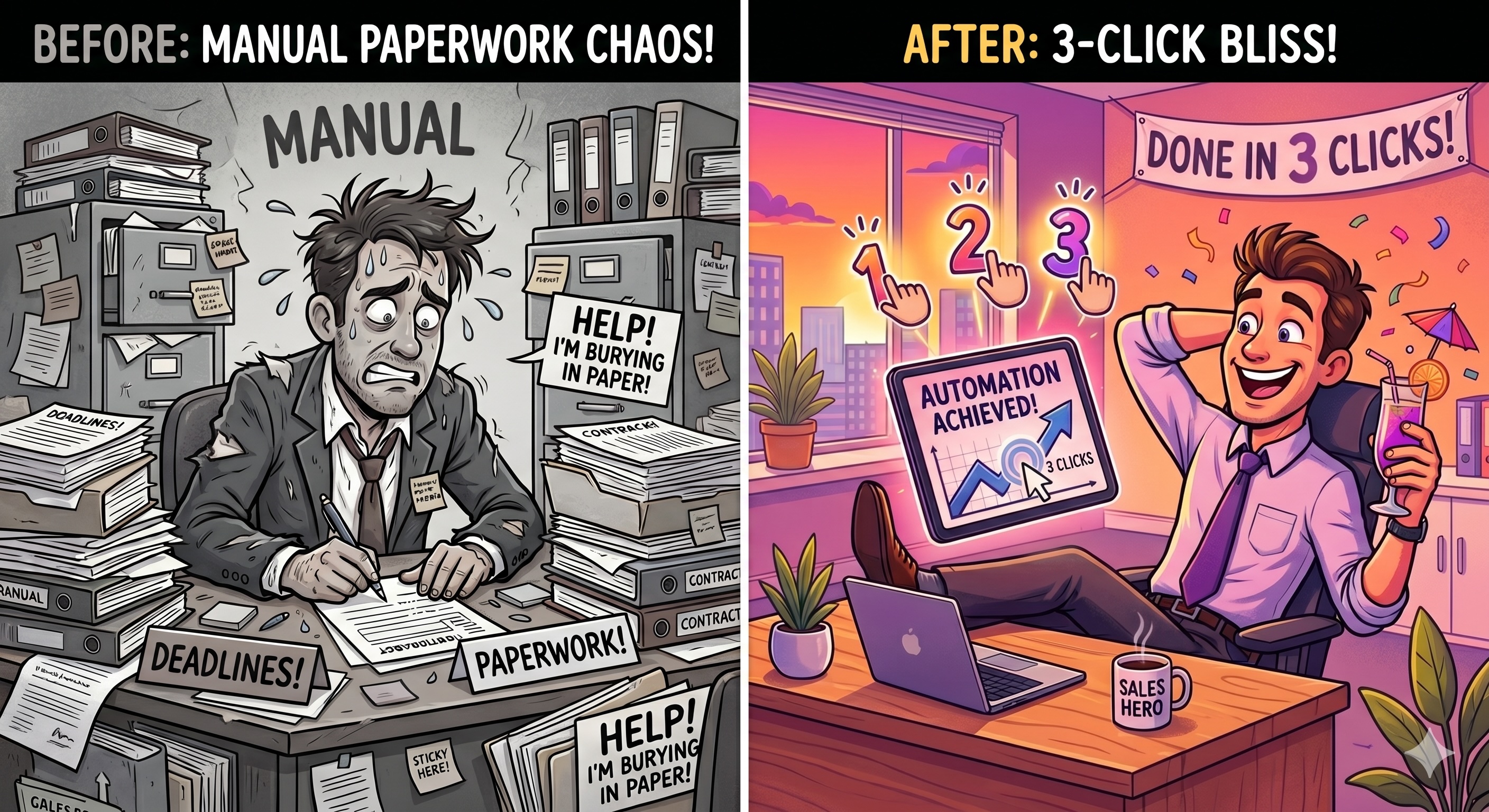
The reason was simple. From the rep's side, a sale that used to take around a hundred clicks and hours of back-and-forth dropped to two or three clicks. Build the basket, send the link, move on. Reps got their afternoons back, and customers got to buy the moment they were ready.
That's the whole point. The rep does the one thing only a human can do - understand the customer and shape the right offer - and the software does the rest.
Controlled, not a free-for-all
The word that unlocks this for cautious teams is controlled.
Because the rep configures the offer and the link carries it, customers can't wander off and assemble something you didn't approve. Pricing stays governed. The order is tied to the right account from the first click. You get the speed of self-serve with the guardrails of a sales-led motion — which is exactly what makes it safe to roll out before you're ready for full PLG.
The rep still gets the credit
Here's the objection that usually kills self-serve inside a sales team: "If the customer clicks Buy themselves, do I lose my commission?"
No. Limio tracks the CRM account and contact behind every link, so the order ties back to the rep who sourced it. The customer does the easy part themselves, and the rep still gets full credit for the deal they brought in.
That matters more than it sounds. Attribution is the reason reps trust the motion instead of quietly steering customers back to the PDF. When they know the system has their back, they'll happily send the link.
Who this is for
If your reps spend more time on paperwork than on selling, this is for you. If your customers keep asking "can I just pay for this online?", this is for you. And if "go full PLG" has been stuck on the roadmap because it feels too big, this is the version you can ship now.
You don't have to rebuild your go-to-market to take the busywork out of it. You just have to let your customers do the part they already want to do.
Want to see how sales-directed checkout would work on your stack? Talk to us.
Your subscription business, on autopilot.
See how Limio can transform your commerce capabilities.