What Is an AI SDR for Inbound Sales? A B2B SaaS Guide
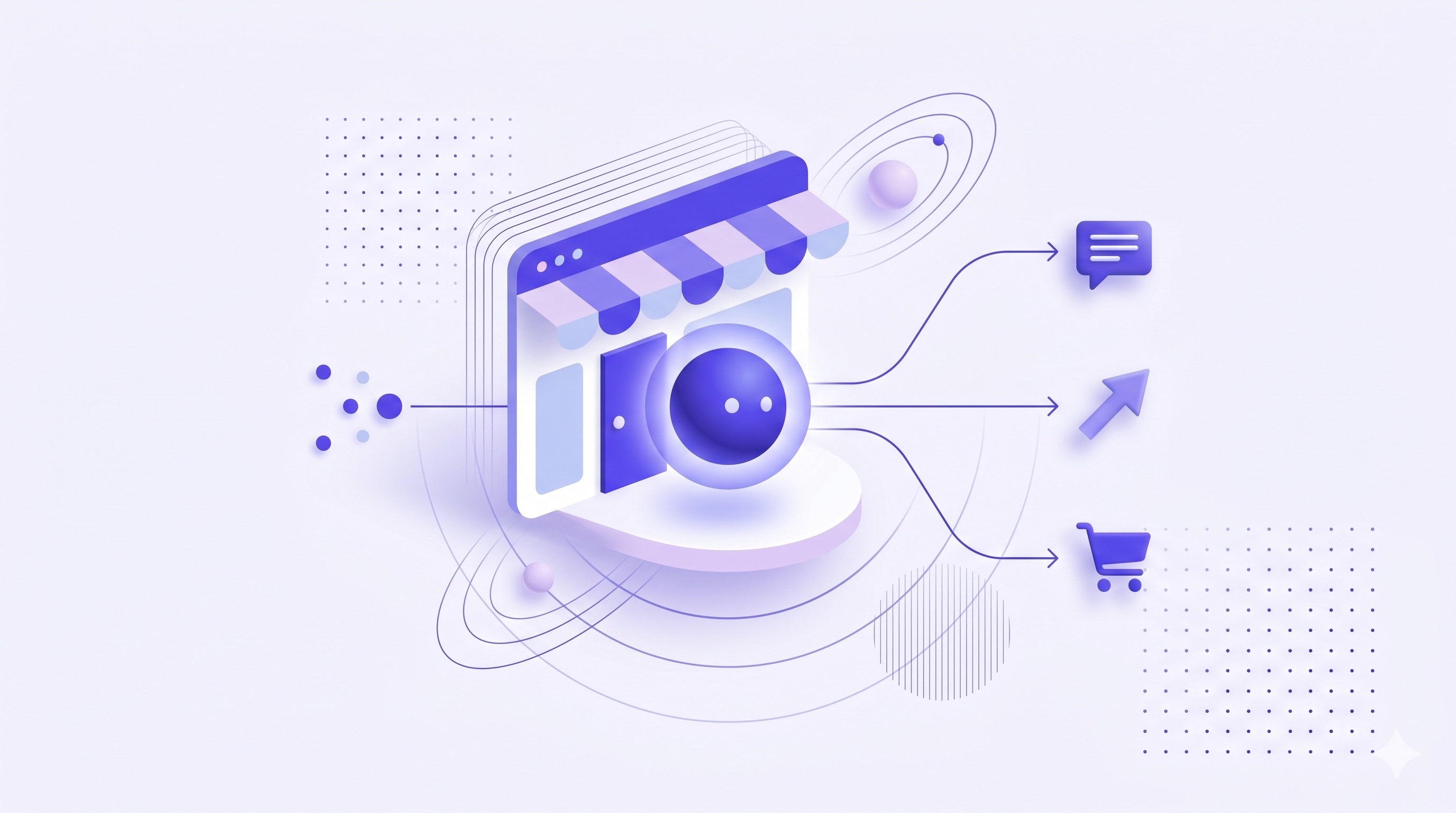
An AI SDR for inbound sales is an autonomous agent that greets website visitors, answers their questions, qualifies them in real time, and routes or sells to them without a human rep in the loop. Think of it as the always-on first responder for every inbound lead that lands on your site, in your chat, or in your inbox.
The category went mainstream fast. Qualified's Piper agent is positioned as the number one AI SDR Agent, with more than 500 customers and over $200M in generated pipeline reported for its users. 11x sells 'digital workers' that run the prospecting and follow-up motion at scale. The shared promise: capture and convert inbound demand faster than a human team can staff for.
Why B2B SaaS is adopting AI SDRs now
Three pressures line up at once:
- Inbound never sleeps, but reps do. A visitor with intent at 11pm gets a form and a 'we will be in touch.' That delay is where pipeline leaks.
- Reps spend too little time selling. Much of an SDR's day goes to triage, data entry, and answering questions a knowledge base could handle.
- Buyers want answers, not forms. Self-guided buyers expect to ask questions and get specifics, like pricing, fit, and next steps, on their schedule.
An AI SDR closes the gap by handling the repeatable 80 percent: the same qualifying questions, the same 'does this work for my use case,' the same routing logic, instantly and around the clock.
What an AI SDR actually does
A capable inbound agent runs the early sales motion end to end:
- Engages the visitor with a relevant, contextual opener instead of a static form.
- Answers product, pricing, and fit questions bidirectionally. The buyer asks, the agent asks back.
- Qualifies by capturing the context a rep would otherwise gather on call one, like use case, size, buyer type, and timeline.
- Routes the right way: warm lead to inside sales, self-serve buyer to checkout, or hobbyist to a help center.
- Follows up across channels, by email and re-engagement, so a drop-off does not become a dead lead.
Most AI SDRs route. The best ones can transact.
Here is the distinction that matters for SaaS and subscription businesses. Most AI SDRs end the journey by booking a meeting or creating a lead. Useful, but the buyer who was ready to buy still gets handed to a calendar. A commerce-enabled agent goes further:
- A typical AI SDR engages and qualifies visitors, follows up across channels, and books a meeting or creates a lead.
- A commerce-enabled agent does all of that, plus it can access the product catalog and pricing, take the buyer all the way to purchase, and connect to billing and provisioning.
For an obvious, qualified buyer, the highest-value move is not 'route to a rep,' it is 'let them buy.' That requires the agent to reach the product catalog, configure the right plan, and complete checkout. An agent built on a commerce platform, with access to Salesforce, billing, and provisioning, can do exactly that; a bolt-on chat layer usually cannot.
What to look for in an inbound AI SDR
- Commerce-enabled: can it complete a purchase, not just hand off?
- Tool-connected: does it have real access to your CRM, catalog, and billing, or is it guessing from scraped content?
- Multichannel: can it follow up by email and re-engage, not only chat live?
- Grounded in good data: the agent is only as accurate as the knowledge base behind it.
- Trustworthy steering: it should guide buyers to the right solution, not just optimize for upsell.
Where the AI SDR fits in your funnel
The inbound agent is not a standalone widget. It is the front of one continuous motion. It qualifies and converts, then hands a known, contextualized customer to onboarding. Pairing an AI SDR with an AI onboarding agent means the buyer is never re-explaining themselves, and it depends on strong conversational qualification at the front door.
FAQ
What is an AI SDR?
An AI SDR (sales development representative) is an autonomous agent that engages, qualifies, and follows up with leads. For inbound, it handles website and inbox conversations without a human rep.
Can an AI SDR close deals?
Most book meetings or create leads. A commerce-enabled agent can go further and take a qualified, ready buyer all the way through checkout.
Is an AI SDR right for B2B SaaS with complex products?
Yes for repeatable, well-understood buying decisions. Genuinely complex or high-trust deals still benefit from a human. The agent's job is to handle volume and lower perceived complexity, not to remove sales entirely.
How is an AI SDR different from a chatbot?
A chatbot answers questions. An AI SDR takes action: qualifying, routing, following up, and when commerce-enabled, transacting, using live access to your systems.
See how a commerce-enabled inbound agent qualifies and converts buyers end to end. Talk to a Limio agent.
Your subscription business, on autopilot.
See how Limio can transform your commerce capabilities.