The Post-Purchase Gap: AI Onboarding Agents for SaaS
The most dangerous moment in SaaS onboarding is the gap between purchase and first access: the hours or days after a customer buys but before their account is provisioned and they reach value. It is where freshly won customers go dark. An AI agent for customer onboarding closes that gap by keeping the customer in motion the moment the order completes.
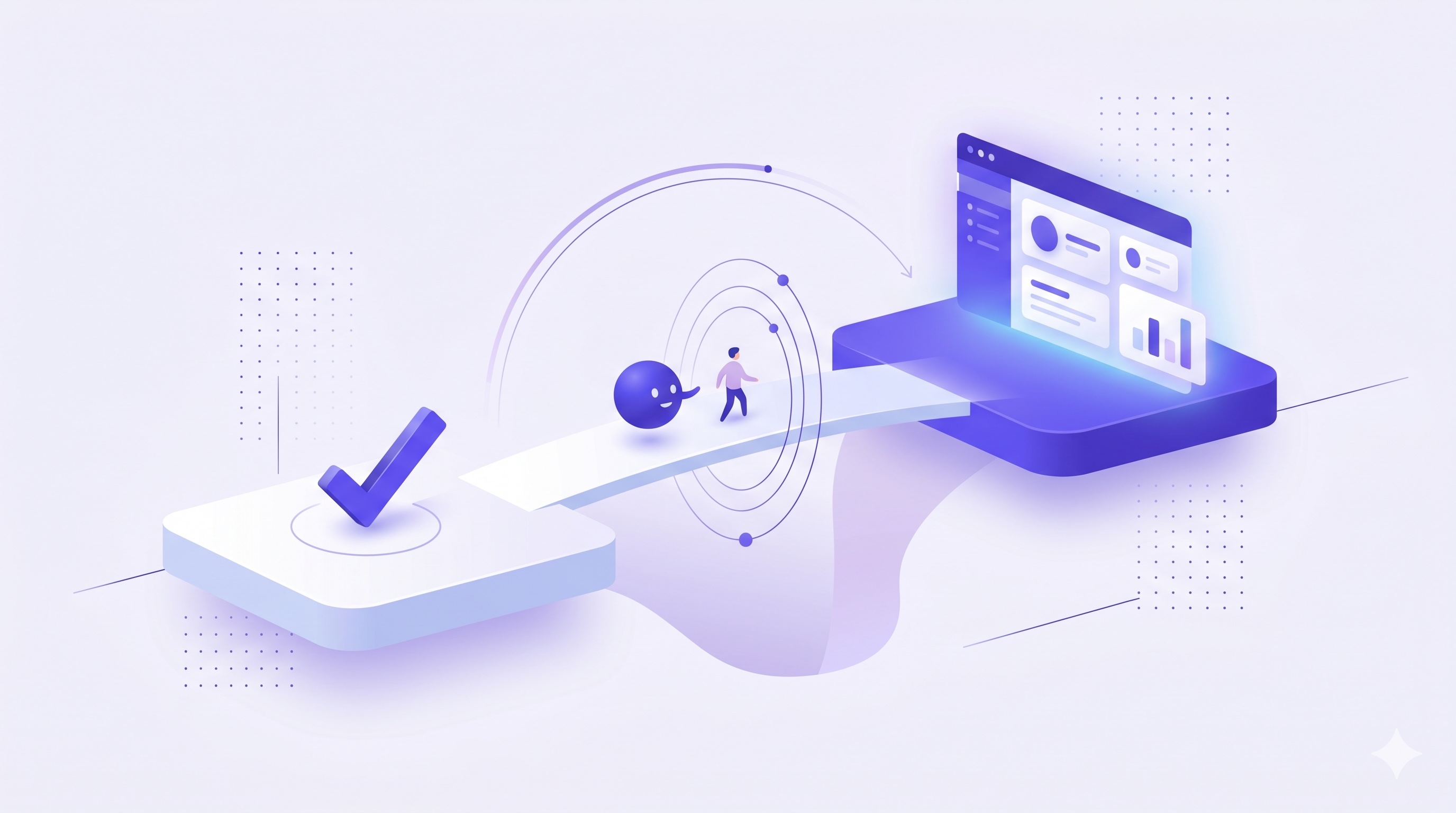
This matters because activation is already weak. Across B2B SaaS, average user activation sits around 37 to 38 percent, and time-to-value stretches from minutes for small accounts to weeks for larger ones. Every hour a new customer waits without a next step is an hour for buyer's remorse to set in.
Why the post-purchase window leaks customers
Right after checkout, three things tend to happen at once, and none of them help the customer:
- Provisioning takes time. The account is not live yet, so the customer has nothing to do.
- The next step is unclear. They bought, but what now goes unanswered.
- Everyone assumes someone else has it. Onboarding falls between sales, support, success, and product.
So the customer closes the tab. By the time anyone follows up, momentum is gone.
What an AI onboarding agent does in that window
The fix is not complex. It is present. An onboarding agent appears on the order-complete page and keeps the customer productive while the account spins up:
- Greets and reassures: here is exactly what happens next, and here is what you can do right now.
- Sets expectations: when the account goes live, when they will see value, what is needed from them.
- Keeps them busy productively by gathering documents, logins, or configuration details they will need anyway, while provisioning runs in parallel.
- Answers the repeatable questions, the same handful of what is next, when, and what do I need questions, instantly.
- Re-engages proactively by nudging customers who bought but never activated, in-app and by email, a day or two later.
That proactive nudge is the lever that compresses time-to-value, especially for mid-market accounts. The agent does not need to be clever; it needs to remove dead air.
The agent is simple. That is the point.
An onboarding agent answers the same handful of repeatable questions and keeps the customer moving. It is not trying to be a consultant. By covering what is next, when do I get value, and what do I need to prepare, it does the thing churn-prone onboarding flows fail to do: it never lets the customer sit still wondering whether they made a mistake. There is a guardian-angel version of this for activation too, catching the customer who bought but never switched the product on and nudging them before the subscription quietly lapses.
Onboarding is the back half of one motion
The best onboarding does not start at the order-complete page. It starts at the first conversation. When an AI SDR for inbound sales qualifies and sells the customer, it already knows their use case. Handing that context to the onboarding agent means the customer never re-explains themselves. It also works in reverse, smoothing the self-serve to sales handoff when an onboarding customer outgrows self-service.
FAQ
What is an AI agent for customer onboarding?
An autonomous agent that guides a new customer from the moment of purchase through to first value, setting expectations, answering setup questions, keeping them productive during provisioning, and re-engaging if they stall.
What is the post-purchase gap?
The window between when a customer buys and when their account is provisioned and usable. With no next step to take, customers disengage, making it a high-risk moment for early churn.
How does an onboarding agent reduce time-to-value?
By removing dead air: it tells the customer what to do immediately, has them prepare what is needed in parallel with provisioning, and proactively nudges them back if they go quiet.
Does it replace customer success?
No. It handles the repeatable early questions and keeps customers moving at scale, freeing success teams to focus on the accounts and moments that need a human.
Close the post-purchase gap and get customers to value faster. Talk to a Limio agent.
Your subscription business, on autopilot.
See how Limio can transform your commerce capabilities.