The complete guide to the DMCC Act subscription rules landing in January 2027
The UK's subscription contract rules now land in January 2027. What changes, and how to build each requirement into your sign-up, renewal and cancellation flows.
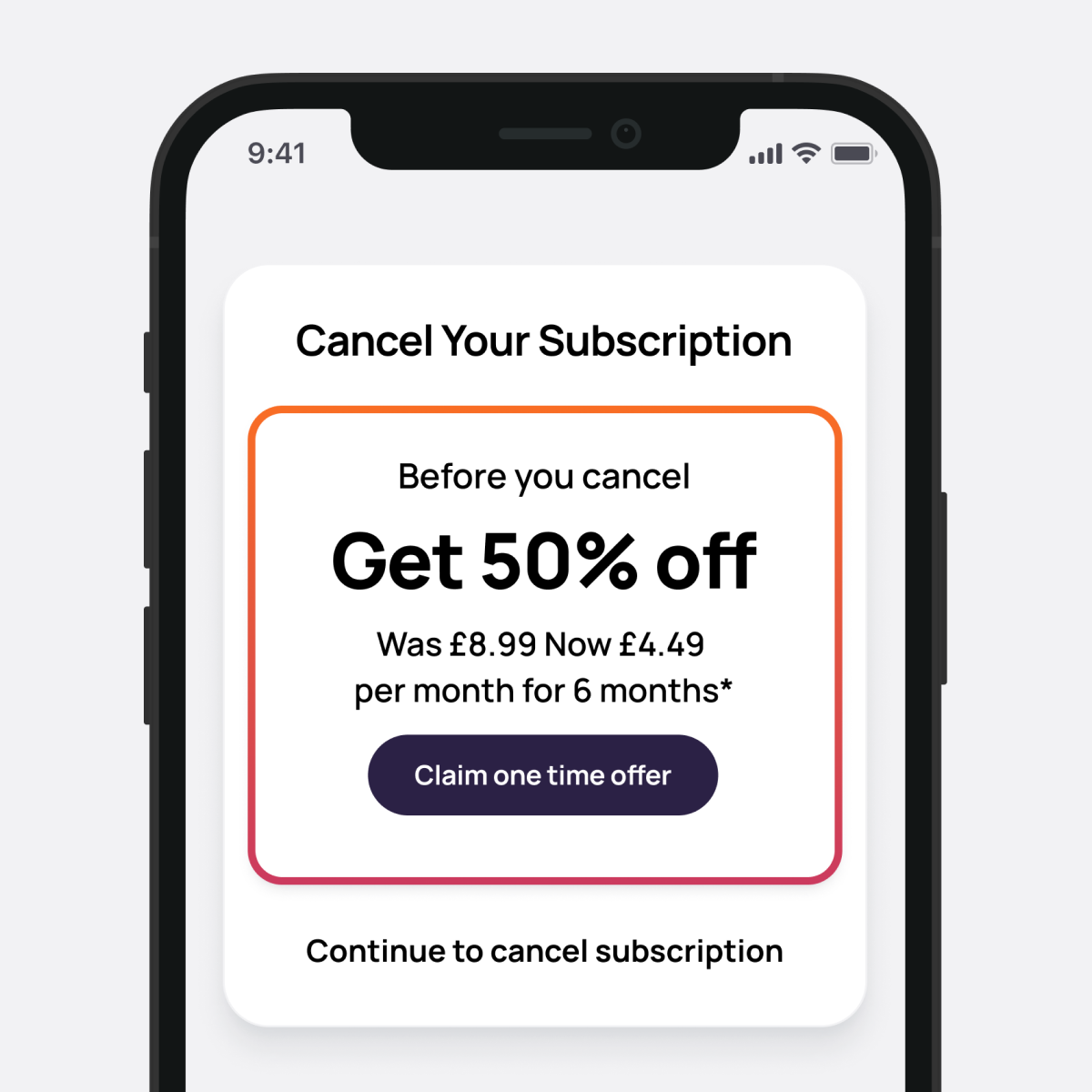
TL;DR
The UK's new subscription rules start in January 2027. The Prime Minister brought the date forward on 10 August 2026. They cover any business that sells auto-renewing subscriptions to UK consumers, wherever that business sits. Six duties:
- Pre-contract information, given separately and up front, with a tick to confirm the customer knows they are agreeing to pay.
- Reminder notices before renewal payments, at least every six months, in writing.
- Two 14-day cooling-off periods, one at sign-up and one after a trial converts or a long contract renews.
- Easy exit. If they joined online, they can leave online, without ringing you.
- End-of-contract notices, in writing, with the key facts shown prominently.
- Refunds within 14 days, part-refunded if the service has already started.
The CMA can fine up to 10% of global turnover. Miss a notice and the customer gets a right to cancel and a refund.
Limio handles this as settings, not code. You can follow the rules and keep your retention. The same cancel flow that lets people leave still makes them an offer. Get in touch and we will walk through your own journeys.
This is a practical summary, not legal advice. The detailed regulations are still to come, so check the specifics with your own lawyers.
What is changing
From January 2027, a UK consumer who signs up to an auto-renewing subscription must be told the key terms before they pay. They must be reminded before renewals. They get 14 days to change their mind at sign-up, and another 14 days after a trial converts or a long contract renews. And they must be able to cancel online, the same way they joined.
Why the date moved
The rules were meant to start in spring 2027. On 10 August 2026 the government pulled the date forward to January, as part of a package on subscription traps.
The government says people spend around £1.6 billion a year on subscriptions they do not use, at roughly £14 a month each. The UK market is about £26 billion a year across 155 million active subscriptions.
The awkward part is that the detailed regulations and the CMA guidance are not published yet. A grace period has been hoped for, not confirmed. So you are building against duties you know, with details that may still shift.
Who is covered
Any contract where a consumer pays for goods, services or digital content that renews automatically. It applies to businesses anywhere in the world that sell to UK consumers. If you have UK subscribers, you are in scope.
Some sectors are out: financial services, insurance, utilities, healthcare, residential rental, education and gambling. B2B contracts are not consumer contracts.
The six duties
1. Tell them the key terms, separately
You have to show the key terms on their own, not buried in your T&Cs, and as close as possible to the moment they commit. That means the recurring payment liability, the payment frequency, the monthly cost, the minimum total amount payable, how and when reminder notices arrive, and how to cancel.
The last step of sign-up needs an express tick that the customer is taking on an obligation to pay. A linked terms page will not do.
2. Remind them before you charge
You must send a reminder before renewal payments, at least once every six months. If payments are less frequent than that, send one before each renewal.
The notice has to arrive a reasonable time before they are charged. You decide what that period is, and you tell them up front. So it has to match what your sign-up flow promised.
Reminders and cooling-off notices must be in writing on a durable medium. Email, PDF, SMS and paper count. An in-app message they cannot keep does not.
3. Two cooling-off periods
- At sign-up: 14 days from entering the contract. This now covers all subscriptions, not only ones sold at a distance.
- At renewal: another 14 days after a relevant renewal. That means the first payment once a free or discounted trial ends, or the auto-renewal of a contract of a year or more.
You have to tell them about the first right on day one, in its own notice, and send another at the start of each renewal window.
Refunds depend on what you sold. Services not yet started: refund in full. Services under way: refund the unused part. Returnable goods: refund on return. Digital content keeps the existing waiver for the first window, and gets a part refund if cancelled at renewal. Pay every refund within 14 days.
4. Let them leave
If they joined online, they must be able to cancel online, through the same channel. A clear button or a webform works. An email address on its own does not. They should be able to finish in one go, without contacting you twice.
You can still ask why they are leaving, and still make them an offer. You cannot drag it out. Terms that make cancelling unreasonably hard will be banned outright.
5. Tell them when it ends
When a contract ends, send a notice in writing within a set time. The key facts have to stand out more than anything else in that message.
6. What happens if you get it wrong
The CMA can fine up to 10% of global turnover, without going to court first. It has already fined Euro Car Parks £473,000 for ignoring information notices.
There is a quieter cost too. Miss a step, such as a reminder notice, and the customer gains a right to cancel with a refund running from that point. A missed email becomes a refund bill.
How to build it in Limio
Five jobs: spot your UK customers, show them the right facts at the right moment, record their consent, refund inside the cooling-off window, and let them leave.
Spot UK customers with Journeys
Most shops sell into several countries. You do not want UK wording in a German checkout. Limio Journeys route people at the CDN edge, before the page renders. No flicker, no client-side redirect.
Route on the billing country, not the IP address. The rules follow the customer, not the connection. Someone who pays from London and reads in Lisbon is still owed UK terms. An IP address tells you where they are standing right now. A VPN or a holiday changes it.
The billing address is your best evidence. Customers keep it up to date because their payments depend on it. Limio's Subscription Billing Country condition reads the billing address on the subscription and routes on its country.
Three things have to be true or the condition will not match:
- The customer is logged in.
- The URL carries a
subId, naming the subscription. Manage My Account already adds it. - The subscription has a billing address. If there are several, Limio uses the newest.
Miss any one and the customer falls through to the fallback tag, quietly. So always set a fallback tag. Test it in a sandbox first.
Got better data? If you hold a verified country from a CRM or an identity provider, use that instead, through a Segment or a JWT condition. A verified country beats a billing address. A billing address beats an IP.
One caveat. These rules protect consumers, not businesses. Billing country will not tell consumers and companies apart, so if you sell to both you need a second condition.
Put the key terms in the checkout
This is a layout job. The Modular Checkout is built from subcomponents you drag into order, so you can do it without code.
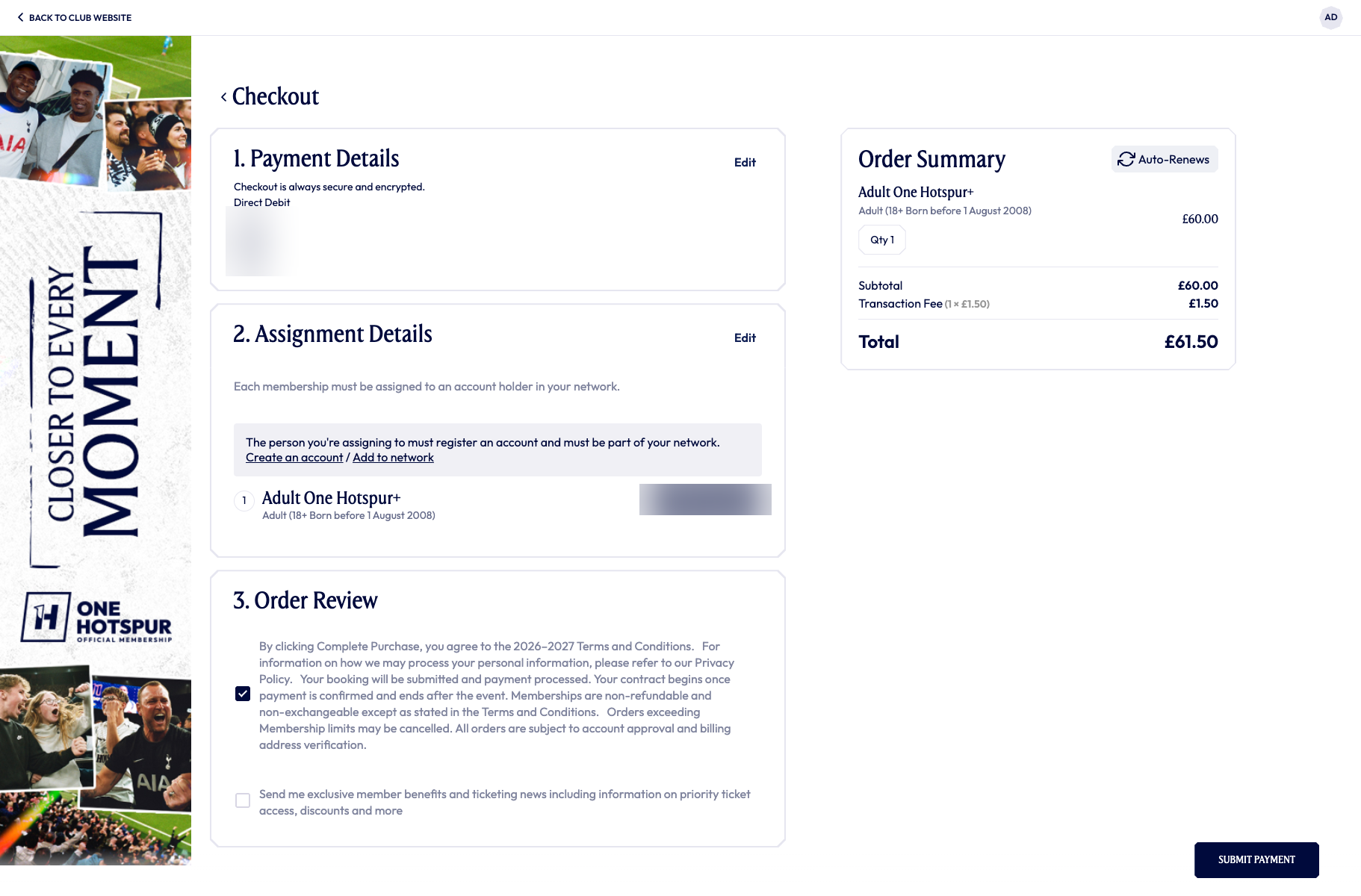
UK. The renewal status sits on the order summary, the total includes the fee, and the customer ticks the terms before paying. Personal details blurred.
.png?alt=media)
International. The same job: what you pay now, what you pay each renewal, what happens after the intro term, and how to cancel.
Use the Display Text subcomponent for the wording. It takes {{totalCost}} and {{termEndDate}}, so it shows the real price and the real end date. Put it right above the payment field.
For the tick, add a required checkbox with the generic Field subcomponent. Say plainly that they are agreeing to a recurring charge. Required means the form will not submit without it, and the value goes back to your billing system with the order. Limio also fingerprints the session, recording the identity provider they signed in with and the IP the order came from. If anyone ever asks you to prove a customer saw and accepted the terms, that is your evidence.
Let the cart components carry the numbers. Cart Items lists what they are buying with prices. Cart Summary shows subtotal, discounts, tax and total. They read the real basket, so nobody has to keep a figure in step by hand.
Conditions save you from building a checkout per offer. A subcomponent can appear only when a certain product is in the basket, so one UK checkout can carry different wording for a trial and an annual plan.
.png?alt=media)
A condition on a checkout field. Trial wording shows only on trial offers.
Confirm it after the order
The Order Complete page is where you restate the renewal date, the renewal price and how to cancel.
The notices themselves go out from whatever you already send with, whether that is Braze, Salesforce Marketing Cloud, Klaviyo, Iterable or HubSpot. Limio joins up to it with webhooks, which fire on customer, subscription and order events and carry the subscription schedule with real term dates.
That split helps here. Your day-one notice, your renewal reminder and your end-of-contract notice all have to state real dates and amounts. A webhook-driven send reads them from the subscription at the moment it happens, instead of a figure someone typed into a template months ago. Your marketing team keeps its own tools, and the compliance content stays right.
Set the cooling-off windows
Limio handles this as offer settings. Each offer has two windows, one for sign-up and one for renewal. You set a length and a unit, so 14 days for both. The window is captured when the customer buys, so they keep the terms they bought under even if you edit the offer later.
The renewal one needs care. The law does not give a fresh 14 days on every renewal, only on a relevant renewal. So set it on annual offers and on offers that follow a trial. You do not need it on a monthly plan. Set it there and you are giving away a refund right the law does not ask for. That can be good for retention, but do it on purpose.
Turn on automatic cancellation refunds in settings. After that, an immediate cancellation inside the window refunds the current term and records it against the subscription.
Two limits to know. Refunds are full-term, and only fire on immediate cancellations, so your cancel flow needs an immediate option. And part refunds are not automatic. The law wants those for services already running and for digital content cancelled at renewal, so you will need your own process. Work out now which offers fit the automatic path.
A cancel journey that meets the bar.
The Cancel tab walks it through: reason, offer, done. The customer can finish without contacting anyone, and the save offer is something they can decline rather than something they have to get past.
An illustrative flow on a fictional product. Your portal runs on your own catalogue, prices and brand.
Make leaving easy
This is where most flows fail, because retention and compliance pull opposite ways. The Cancel Subscription Buttons component does the compliant bit: it cancels on the page through a confirm dialog, with no redirect and no second contact. You choose immediate or end of term, which is how you support the immediate cancellation a refund depends on.
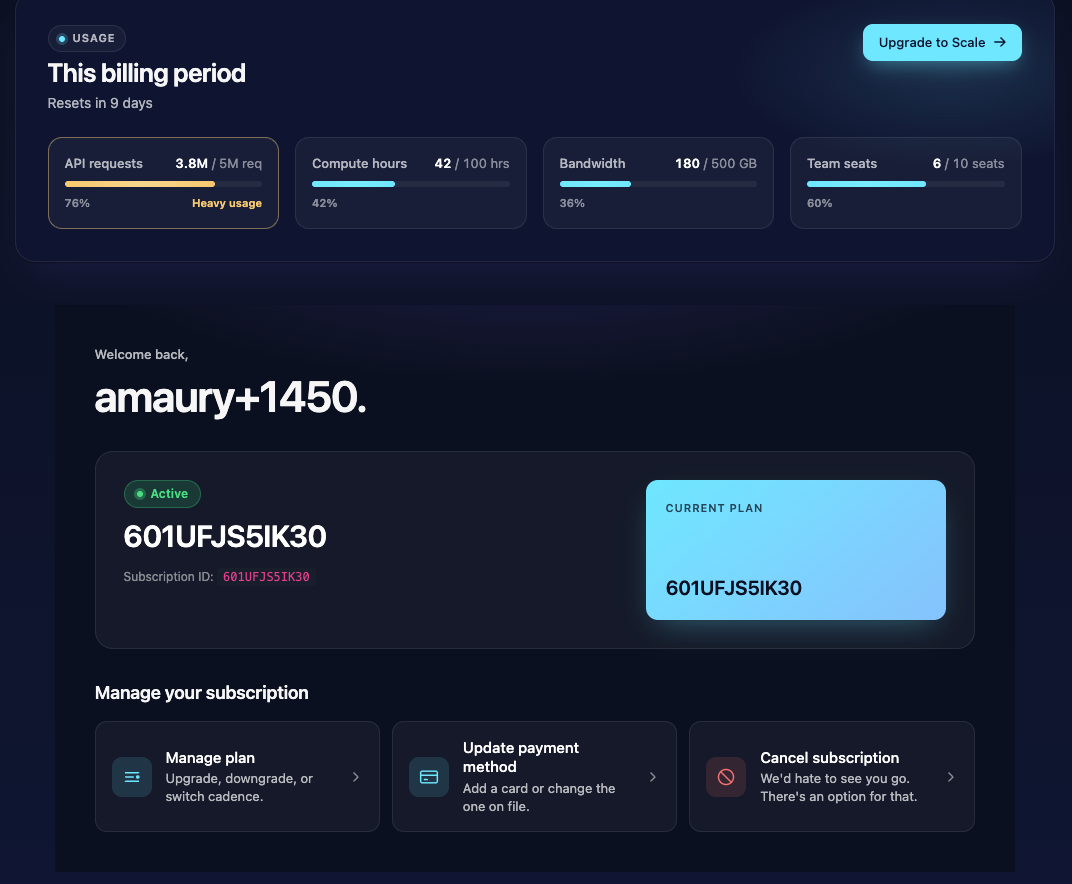
Cancel sits next to the other account actions. Exit should be as easy as sign-up, and that starts with being visible.
Audit the rest yourself. Two things to check:
- How many steps. Survey, offer, confirm is three screens. Can someone finish quickly without contacting you? A survey they can skip is fine. One they cannot is not.
- Dead ends. Any branch that finishes with "contact us" instead of a button is the thing these rules are aimed at. Live chat next to a working cancel button is fine. Live chat instead of one is not.
Keep the retention, drop the friction
You can still make an offer. Limio's cancel and save flow is a reason survey, some pages with discounts or other offers, and a Journey that picks between them.
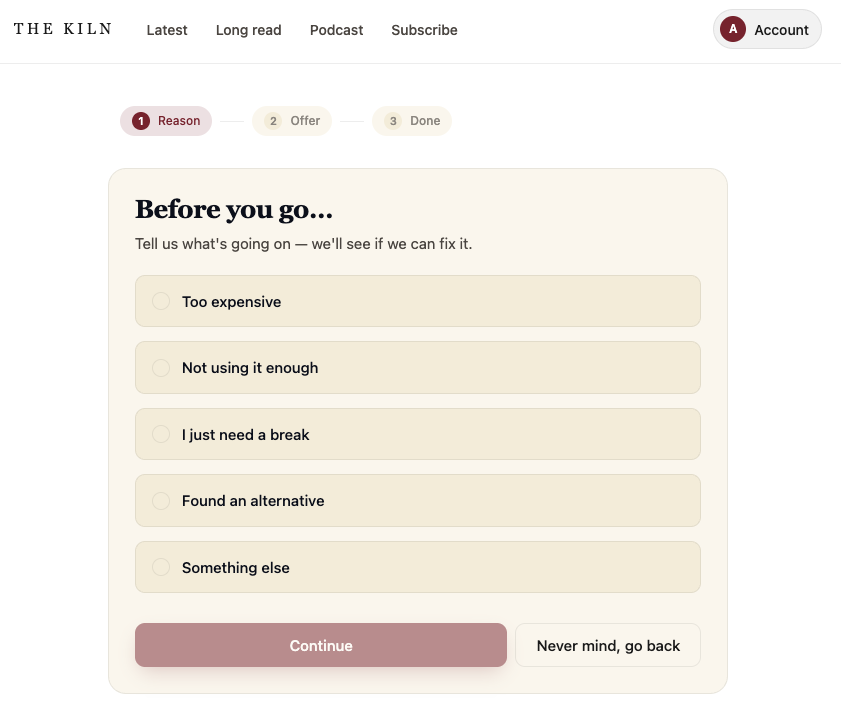
The same flow as the customer sees it. The stepper promises three screens, and Continue is never hidden behind the offer.
The reason they pick passes to the next page in the URL, and the cancel button attaches it to the order. So you can show what each customer saw and what they chose.
.png?alt=media)
Building it. Each reason carries a URL, pointing at a page or starting a Journey.
Put a visible cancel button on every save page. Then the offer is something they can accept, not something to get past. It keeps you inside the one-contact rule. It is also better retention: an offer taken under duress churns next time.
Prove what you did
Enforcement turns on what you can show. Track Changes logs your config changes, so you can say which checkout was live on a given day. The cancel and save and checkout conversion analytics show what your changes did to behaviour, so you find out before finance does.
What to do between now and January
- Now: list your exposure. Every auto-renewing offer sold to UK consumers. For each, note the renewal cadence, whether it follows a trial, whether the term is a year or more, and how people cancel today. Check how many subscriptions carry a usable billing address, because that is what the routing leans on.
- Now: cancel your own subscription. Count the screens and clicks. Note every point that asks for contact instead of offering a button.
- October: split the UK route. Put a billing-country Journey in front of your cancel and renewal flows, and a separate UK checkout behind it. This has the longest testing tail.
- October and November: write the wording. One version per offer type, with legal review. Build them as Display Text with conditions, not as separate checkouts.
- November: wire up the notices. Agree your reminder timing, say it in the checkout copy, and connect the webhooks to your email platform.
- November and December: refunds. Set the windows on every offer in scope, turn on automatic refunds, and define the manual process for part refunds.
- December: test as a customer. Buy, cancel inside the window, check the money came back. Do it for a trial, a monthly and an annual offer, because they hit different rules.
Want a second pair of eyes?
We work with subscription and membership businesses on exactly this. If you want to walk through your own journeys before January, get in touch.
What is still unknown
- The exact content and timing of reminder notices.
- How contracts that mix goods, services and digital content are treated.
- How prominent the pre-contract information has to be.
- Whether there is a grace period after January.
None of that changes the work. Route UK customers separately. Put the key terms in the checkout. Set your cooling-off windows per offer. Fire notices off real subscription data. Make the cancel button work. The open questions are about wording and timing, and those should be settings, not code.
Sources
- GOV.UK: PM starts roll out of everyday fixes on the cost of living
- TLT: DMCC Act subscription contracts regime brought forward by the PM
- CMS: Cancel culture, the UK subscription contracts regime takes shape
- Latham & Watkins: New requirements accelerated for UK consumer subscription contracts
- Limio product documentation
DMCC Act subscription rules: frequently asked questions
The questions subscription and membership teams ask when they start preparing for January 2027.
Preparing for January 2027?
We work with subscription and membership businesses on sign-up, renewal and cancellation design. Walk through your own journeys with us.