Why We Moved limio.com Off Webflow — Onto Limio Itself
Working with Limio + Claude became 10x easier than working with Webflow. So we moved limio.com onto Limio itself — 29 pages mirrored in a day, 23 PRs, and a blog Claude now publishes for us.
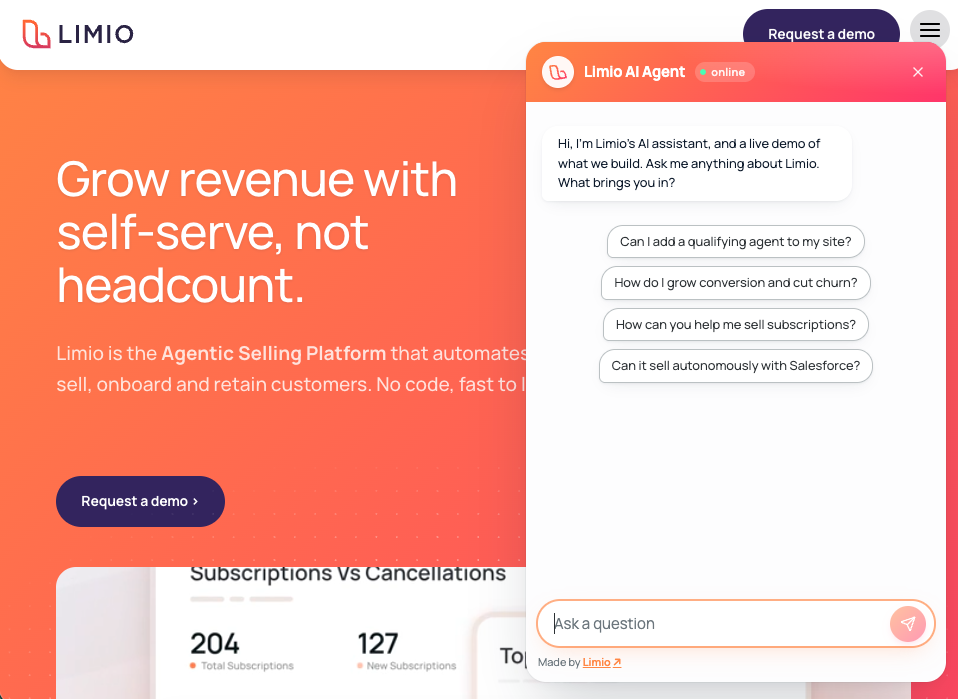
Last week we moved limio.com off Webflow onto Limio itself. We didn’t take that decision lightly. But as 2026 progressed, it became inevitable: working with Limio + Claude was 10x easier than working with Webflow.
Webflow was the right call in 2024
First, let’s go back a bit. We picked Webflow in 2024 and it was the right call. Great tool. I was personally envious of their $140M series B compared to us, the little scrappy, primarily bootstrapped startup. As a commerce platform, we have a CMS and it seemed inconceivable back then we could ever catch up or even compare. The amount of styling settings and granularity of the Webflow Design was insane. So we bit the bullet, got a designer, got a professional Webflow contractor and spent 3 months redesigning our website and moving it to Webflow.
Then Claude Code changed the math
Fast forward to December 2025. Claude Code takes a leap with Opus 4.6. We started playing with it and we realised something: Limio is perfect for vibe-coding. Limio allows you to create custom React components, built on a robust SDK and a library of existing components baking in 8 years of best practices around SEO, performance, accessibility and commerce. So Limio started embracing vibe coding. First, it was our Solutions team. They started creating custom components, sites, shops, portals for our customers selling subscriptions online using Claude. As they scaled, we started building a series of internal and external skills to create better components, we developed our catalog MCP to quickly fill in product data, and we beefed up and better documented our SDK and APIs.
Then at the end of June, we thought — hey, Limio is getting really good at creating pixel-perfect sites, we should maybe dogfood our own product. For fun, Benny created a Limio pricing page. Then I created a landing page for our upcoming selling agent. It was easy, it was fun, it was like talking to a great designer, who would then create something in Limio’s Page Builder for me to review, iterate and publish.
One prompt to start the migration
And last week, I asked Claude this specific prompt: “im a bit fed up with our website https://www.limio.com/ on webflow. I'd like to move it to limio”. Not the most thorough business case, I’ll grant you that. There were a few things we wanted to change:
- Our Webflow had been so customised and the Webflow product itself was so intricate, we were scared of touching it.
- We wanted to dogfood our own product.
- We wanted to better tap Claude to continuously improve our website, create content and draft hyper-personalised landing pages (more on that later).
So Claude drafted a plan. First attempt? I was in two minds. It missed components, our nav seemed too complex to clone, and I told the team “frankly, not sure it’s worth the effort vs sticking with Webflow.” Migrating is effort no matter what you migrate to.
The unlock: give Claude the live HTML
Then Benny said: just give Claude the live HTML and let it convert everything into components. It’s our code, our design, our content. That unlocked it. We had 29 core pages mirrored in a day. Feature pages, pricing, checkout, contact — pixel-matched to the originals.
The blog trade-off
The trade-off we debated hardest was the blog. The plan was to host it on our new newsletter platform, Beehiiv, so content and email lived together. We kept it on limio.com instead — we’ve learned from our own customers that splitting content across domains fragments your traffic and hurts SEO. So Claude now publishes posts straight into Limio, using a publishing skill it wrote for itself.
Why this works
Why this works at all: Limio custom components are React components in GitHub. Claude doesn’t wrestle with an MCP and a page-builder UI — it writes code, opens a PR, ships it and it lands on Limio’s Page Builder, ready for review and publication. 23 PRs, mostly done on evenings, weekends and alongside other work. First PR on June 30th, last PR on July 7th.
What it unlocks
And that’s the real point. It’s not that Webflow got worse — it’s that Limio + Claude got more powerful and intuitive to use than Webflow, for us. And it opens up tons of new ideas. We’ve always been excited about personalisation. Now we can create hundreds of super targeted landing pages, each targeted to a specific ICP, each with a Limio agent that can qualify, answer questions and sell — generated straight from Claude. We’ve got the page building tech, we’ve got the selling agent.
We sell subscription commerce infrastructure, which includes site building. It always felt a bit wrong that our own site ran on someone else’s platform.
Not anymore.
Your subscription business, on autopilot.
See how Limio can transform your commerce capabilities.