What is agentic selling?
Using AI agents to take a buyer through the whole purchase, from qualifying and quoting to checkout and onboarding, not only to the start of one.
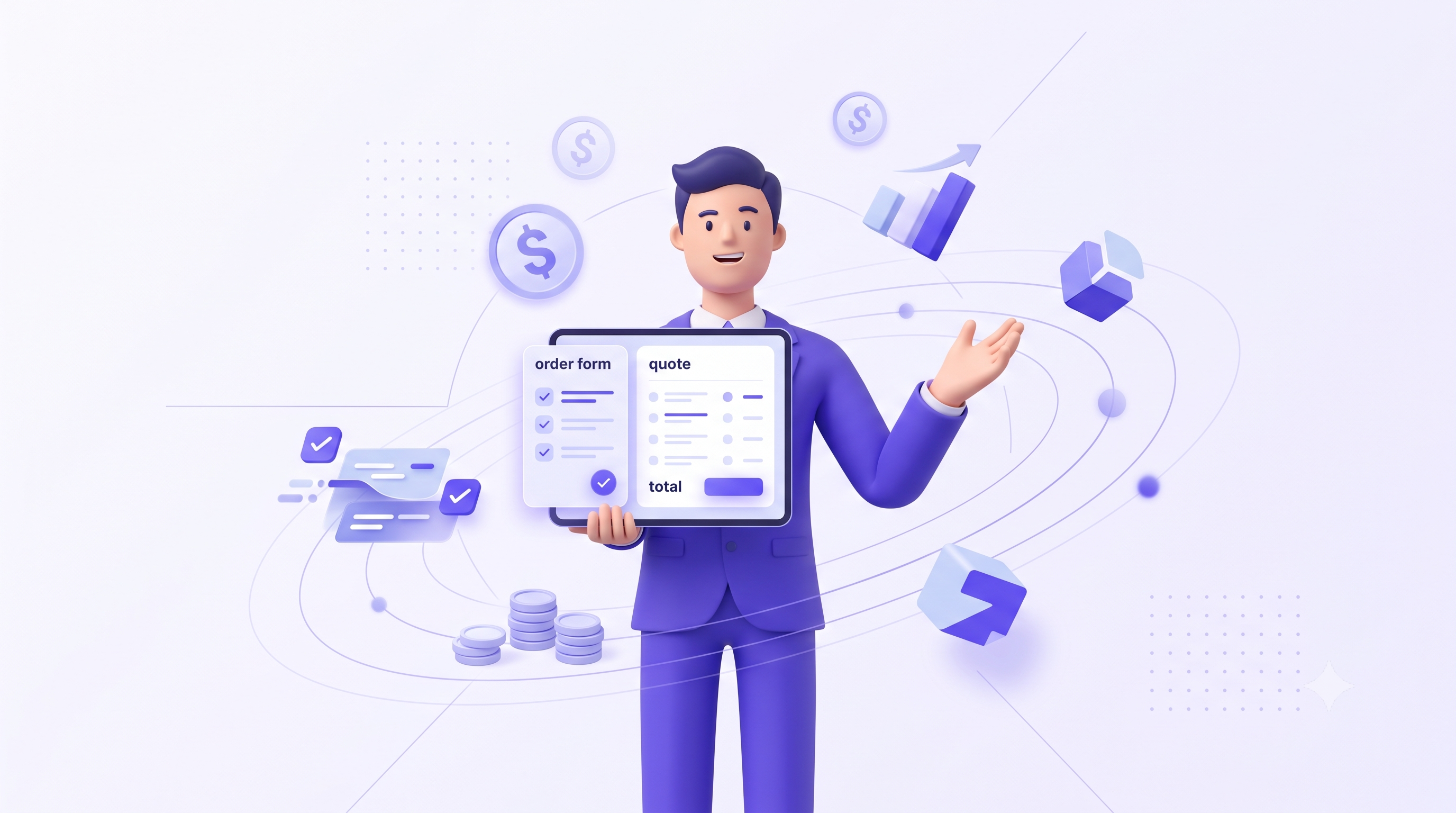
Agentic selling is the use of AI agents to carry a buyer through a purchase, not only to the start of one. An agentic selling system talks to buyers on your website, works out what they need, recommends the right plan, builds the quote, and hands them into a checkout with the correct package, pricing, and terms. After the payment, it helps the new customer get set up and stays useful through renewals and upgrades.
The word “agentic” matters. A chatbot answers questions from a script. An agent works towards a goal. It holds a real conversation, remembers the context, and takes the steps needed to get a buyer from “what does this cost?” to a paid, active subscription.
Also called
Agentic commerce, AI-led selling, conversational selling agents, autonomous selling.
How it differs from a chatbot or an AI SDR
Most AI tools on websites today do one of two things. They answer questions, or they qualify a visitor and book a meeting with a salesperson. Both are useful, and both stop at the same point. The moment the buyer is ready to act, a human has to take over.
That gap is expensive. A buyer who has decided they want the mid-tier plan does not want a calendar invite for Thursday. Plenty of them leave, and the ones who stay wait days for an answer they could have had in the moment.
Agentic selling closes that gap. The agent can finish the job because it is connected to the systems a sale runs on, the product catalogue, the pricing, the checkout, and the billing. When it recommends a plan, it reads your real packaging. The quote it builds has the right tax and terms. And because the same engine handles the payment, the subscription is set up correctly.
What an agentic selling system does
A full agentic selling system covers five jobs.
Qualify. The agent answers product and pricing questions day and night, filters out spam, and captures what each visitor needs. Forms capture a name and an email. A conversation captures intent.
Quote. The agent turns that conversation into a concrete recommendation and a priced quote, drawn from your live catalogue rather than a static pricing page.
Check out. For transactional purchases, the agent sends the buyer into a checkout it has already assembled, so they pay for exactly what was discussed.
Onboard. The quiet failure in subscription businesses is the gap between payment and first use. The agent fills it, gathering what setup needs and walking the new customer through their first steps.
Support the humans. Not every deal should close in a conversation with an agent. A rep can take over any conversation with the full transcript and quote attached, and can send a buyer an agent-assembled purchase link instead of building the quote by hand.
The agentic selling lifecycle
Those jobs play out across four stages of a customer’s life. At each one the customer is a different person, the agent is reading different signals, and the stage closes on a single concrete outcome, which becomes the context the next stage starts from.
Visitor → prospect
Buyer
New customer
Customer / account
Your team stays in the picture at every stage. A rep or CSM can step in with everything the agent has already gathered (the full conversation, the quote, the problems the customer raised, their usage) instead of a cold form fill.
Where it works, and where it doesn’t
Agentic selling suits transactional purchases made by buyers who understand what they are buying, like a team picking a plan, an existing customer upgrading, or a straightforward renewal. Considered sales built on trust across several calls still belong to people. In those deals the agent’s job is to qualify well, hand over with full context, and pick the buyer back up at onboarding.
Being clear about that boundary is part of doing this well. An agent asked to close deals it cannot close will frustrate buyers and reps alike.
That boundary is not fixed. Today the agent is strongest on transactional, repeatable purchases made by educated buyers. As agents hold context across more interactions and reason over longer horizons, the line moves and longer, more considered sales come into range. Until then, the human-in-the-loop handoffs are how considered deals still get the agent’s help, without asking it to close what it cannot.
Why teams adopt it
Marketing teams adopt it because traffic that used to bounce at a form or a basic chat widget now gets its question answered and stays. Sales teams adopt it because the agent absorbs the billing questions and unqualified chats that eat rep time, and covers the hours when nobody is online. Finance and operations teams adopt it because some deals complete without a rep at all, and every customer reaches active use faster.
Agentic selling with Limio
Limio is an agentic selling platform for SaaS and subscription businesses. The agent runs on Limio’s commerce engine, so it can go beyond conversation. It can qualify a buyer, quote the right plan, and take an order through to checkout and onboarding, end to end. There is no code to write, it learns your products from the documents and pages you already have, and your team can hand conversations between agent and rep in either direction.
We are early, and we are building this in public, starting on our own website. If you sell subscriptions and your current chat widget stops at “book a meeting”, we would like to show you what the next step looks like.
Frequently asked questions
Your subscription business, on autopilot.
See how Limio can transform your commerce capabilities.